

Over the past few months, I tested several popular espresso makers in my kitchen — from budget-friendly machines to professional-grade setups. I’ve always believed that a good day starts with a great espresso. I brewed countless shots, frothed milk for cappuccinos, and even timed how quickly each machine heated up.
My goal was simple: to find the best espresso maker for different types of coffee lovers.
If you’re shopping for an espresso maker, here are a few key questions to ask yourself before buying:
- Do you want push-button convenience, or do you enjoy the ritual of grinding beans and pulling a shot?
- How much counter space do you have?
- Do you mostly drink espresso, or do you also want cappuccinos, lattes, and iced coffee?
- What’s your budget — under $200, mid-range, or premium?
Espresso Machine Types
| Type | Description | Example Product |
|---|---|---|
| Manual / Semi-Automatic | Hands-on control, you grind beans and pull shots manually | Breville BES870XL Barista Express |
| Pod-Based / Automatic | Single-button operation, pre-measured pods | Nespresso VertuoPlus by De’Longhi |
| Budget Compact Machines | Affordable, smaller footprint, good for beginners | De’Longhi Stilosa EC260BK |
| Multi-Function | Espresso plus cappuccino/latte with milk frothing | Ninja Espresso & Coffee Barista System |
Our Top Picks by Category
| Category | Product |
|---|---|
| Best Overall | Breville BES870XL Barista Express Espresso Machine |
| Best for Pods | Nespresso VertuoPlus Coffee and Espresso Maker |
| Best Budget | De’Longhi Stilosa Manual Espresso Machine EC260BK |
| Best Multi-Use | Ninja DualBrew Espresso & Coffee Barista System ES601 |
| Best Compact | Gevi 20 Bar Professional Espresso Machine |
Product Reviews
Breville BES870XL Barista Express Espresso Machine
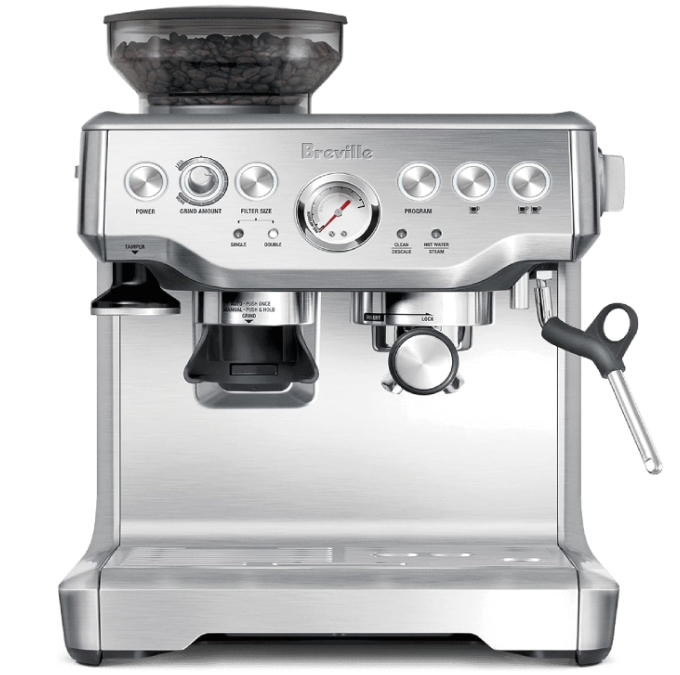
Best for: Home baristas who want café-quality espresso with full control.
Why We Like It:
This machine was the most satisfying to use. The built-in conical burr grinder means you can grind fresh beans right before brewing. The pressure gauge helped me dial in the perfect shot, and the steam wand produced silky microfoam that rivaled my favorite café.
It does have a learning curve, but once you get the hang of it, the results are outstanding.
Pros
- Built-in grinder saves counter space
- Café-quality espresso shots
- Professional steam wand for latte art
- Solid stainless-steel build
Cons
- Steeper learning curve for beginners
- More expensive than entry-level machines
Nespresso VertuoPlus Coffee and Espresso Maker
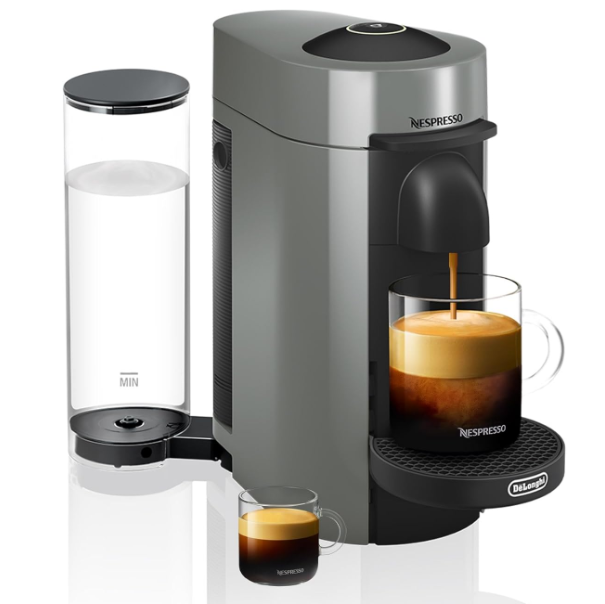
Best for: Quick, no-fuss espresso and coffee lovers.
Why We Like It:
When I wanted espresso in under a minute, this was my go-to. Just pop in a pod, press a button, and it brews with a thick crema every time. It also makes full-sized coffee, which is great if you share the machine with non-espresso drinkers.
Pros
- One-button operation
- Consistent results every time
- Brews both espresso and full cups of coffee
- Slim design fits small counters
Cons
- Limited to Nespresso pods
- Less control over strength and flavor
De’Longhi Stilosa Manual Espresso Machine EC260BK
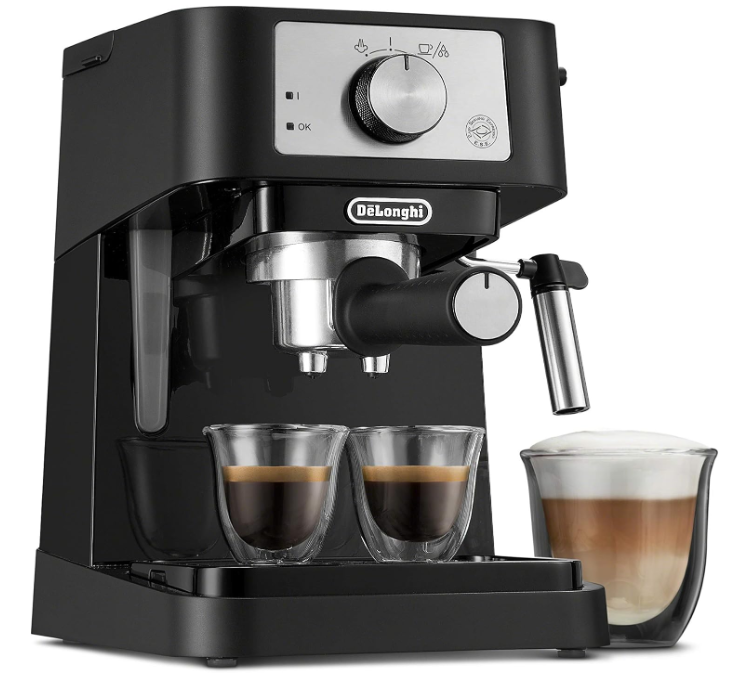
Best for: Beginners on a budget.
Why We Like It:
This compact, affordable machine surprised me. While it doesn’t have the finesse of the Breville, it consistently brewed solid espresso shots. The milk frother worked fine for cappuccinos, though it’s more basic than premium machines.
Pros
- Very affordable
- Compact and lightweight
- Easy to operate
- Good entry-level option
Cons
- Basic steam wand
- Build feels less durable
Ninja DualBrew Espresso & Coffee Barista System ES601
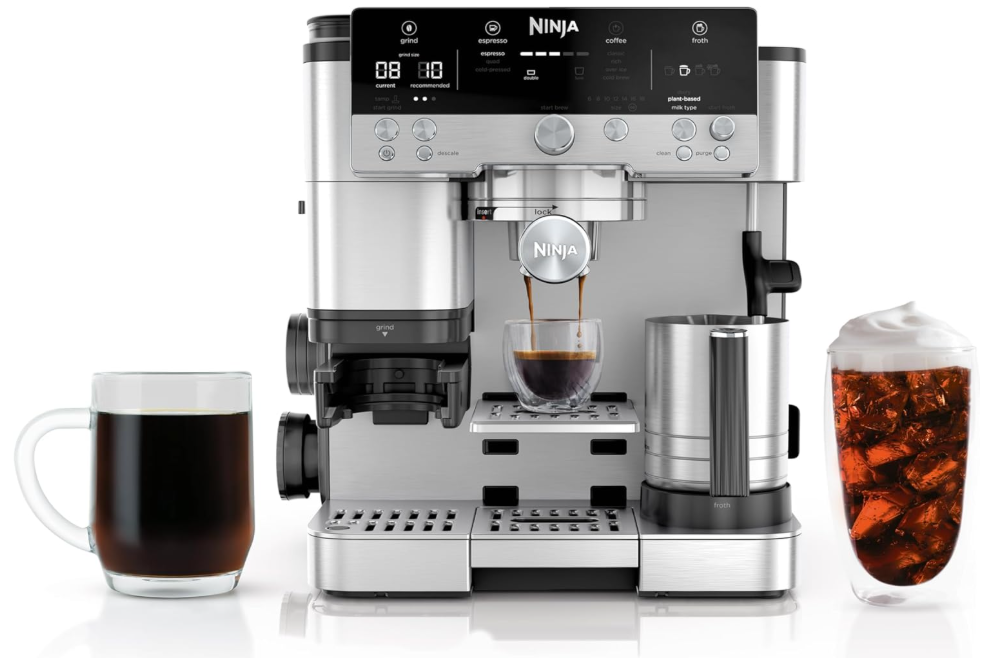
Best for: Families or anyone who wants versatility.
Why We Like It:
This was the most versatile machine I tested. It makes espresso, cappuccinos, and full pots of coffee. The integrated milk frother was surprisingly powerful, and the large water tank meant fewer refills.
Pros
- Espresso plus full carafe brewing
- Strong frother for cappuccinos and lattes
- Easy cleaning and maintenance
- Large water reservoir
Cons
- Bulkier than other machines
- Espresso isn’t as rich as Breville or Nespresso
Gevi 20 Bar Professional Espresso Machine
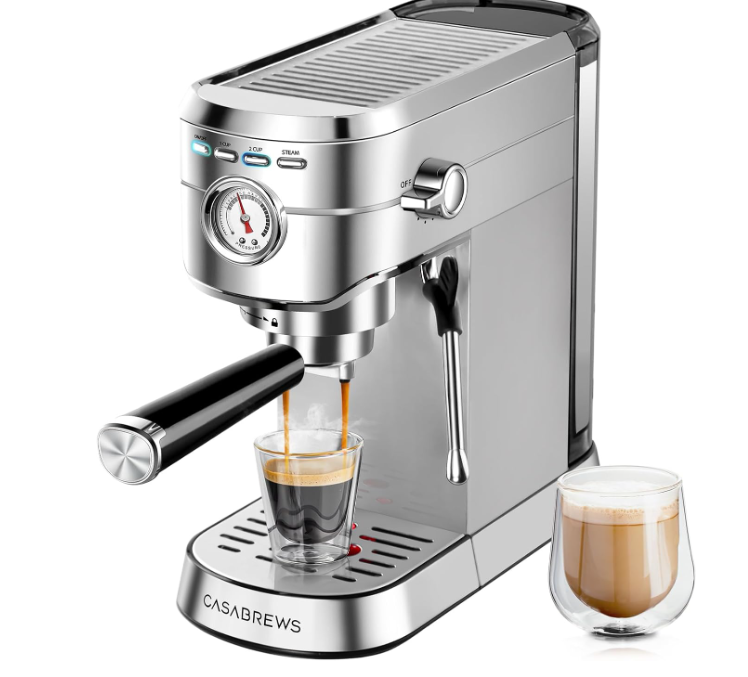
Best for: Compact kitchens with limited space.
Why We Like It:
Gevi’s machine is sleek, lightweight, and simple to use. Despite its small footprint, it produced strong shots thanks to its 20-bar pressure pump. It’s a great budget-friendly option for apartments or small kitchens.
Pros
- Affordable mid-range price
- Slim design, easy to store
- 20-bar pump for solid espresso extraction
- Removable water tank
Cons
- Smaller capacity
- Frother is less powerful
Other Things to Consider
Beyond the machines themselves, think about:
- Water filtration: Filtered water can extend the life of your espresso maker.
- Accessories: Tamper, frothing pitcher, and knock box make the process smoother.
- Noise level: Some machines (like Breville) are louder than pod machines.
- Cleaning: Pod systems are the easiest to clean, while manual machines need regular descaling.
- Price range: Budget machines start under $150, while premium models can exceed $700.
Our write-up on hands on review picks up where this leaves off.
Frequently Asked Questions
What’s the difference between espresso machines and coffee makers?
Espresso machines use high pressure to extract a small, concentrated shot of coffee, while drip coffee makers use gravity. Espresso machines create a thicker, stronger drink with crema on top, ideal for cappuccinos and lattes.
Do I need a built-in grinder?
Not necessarily. A built-in grinder (like on the Breville Barista Express) ensures freshness, but it adds cost. If you already own a good burr grinder, you can save by buying a machine without one.
How important is bar pressure?
Bar pressure determines how much force pushes water through coffee grounds. A minimum of 9 bars is required for true espresso. Machines like the Gevi (20 bar) provide strong extraction, while pod systems simulate pressure differently.
Can I make lattes and cappuccinos with all these machines?
Yes, but the quality varies. Semi-automatic machines with steam wands give you the most control. Pod machines often need a separate frother unless included.
How long do espresso machines last?
With proper maintenance, a good espresso machine can last 5–10 years. Regular descaling and cleaning are key, especially in areas with hard water.
Conclusion
After weeks of testing, my top recommendation is the Breville BES870XL Barista Express if you want the most authentic, café-style espresso at home. If speed and convenience matter more, the Nespresso VertuoPlus is hard to beat. For budget shoppers, the De’Longhi Stilosa EC260BK offers solid performance without draining your wallet.
If you need versatility for the whole family, the Ninja Barista System ES601 is a winner. And if you want something compact yet powerful, the Gevi 20 Bar Espresso Machine is a great fit. No matter your choice, each of these machines brings a great cup of espresso to your kitchen.
Leave a Reply