


I spent three weeks testing the five machines below in my own kitchen, batch-cooking on busy weeknights and prepping for a weekend family get-together. I ran the same tasks on each model—onions, carrots, and almonds for uniform chopping; mozzarella and cheddar for shredding; pie crust and pizza dough for mixing; mayo and hummus for emulsifying; plus a pesto test to check consistency. I also timed setup and cleanup, measured noise at counter height, and noted how well each machine stored in a standard cabinet.
One important note: the Vitamix listed below is a high-powered blender, not a dedicated food processor. I included it because some readers want a blender-first appliance that can overlap with processor tasks. If you’re set on a classic food processor (with discs and a wide feed tube), the other four are exactly that.
Quick Buying Questions
- What capacity do you actually need? Solo cooks can live happily at 7–9 cups; families and bulk preppers often prefer 12–14 cups.
- How often will you make dough? If “weekly,” prioritize a strong motor and a dedicated dough blade.
- Do you value speed or precision? Auto programs are convenient, but manual pulse control plus sharp discs give the most consistent cuts.
- Is easy cleanup non-negotiable? Look for simple, few-part lids and clearly labeled dishwasher-safe components.
- Storage space tight? A compact 7-cup unit or a model with on-board blade storage helps keep the counter clear.
Food Processor Types (What Fits Your Kitchen)
| Type | Typical Bowl Size | Best For | What You Gain | What You Give Up |
|---|---|---|---|---|
| Compact | 7–8 cups | Small kitchens, everyday chopping | Smaller footprint, faster setup | Smaller batches, shorter feed tube |
| Mid-Size | 9–11 cups | Most households, meal prep | Versatility, better discs | Slightly larger storage footprint |
| Full-Size | 12–14 cups | Families, bulk doughs | Power + capacity, wide feed tube | Heavier, pricier |
| Blender/Hybrid | 48–64 oz jars | Smoothies + occasional “processing” | One machine for many jobs | Not a true processor (different blades/discs) |
Our Top Picks by Category
| Category | Product |
|---|---|
| Best Overall | Cuisinart DFP-14BCNY 14-Cup Food Processor |
| Best Value | Hamilton Beach 70730 10-Cup Bowl Scraper Food Processor |
| Best Mid-Size Workhorse | Ninja BN601 Professional Plus Food Processor |
| Best Compact | KitchenAid KFP0718CU 7-Cup Food Processor |
| Best Blender-First Alternative | Vitamix Ascent X5 Blender |
Detailed Hands-On Reviews
Cuisinart DFP-14BCNY 14-Cup Food Processor
Tested by Me, with two recipe testers (family cooks)
Best for Families and batch cookers who want classic, no-nonsense power
Why We Like It
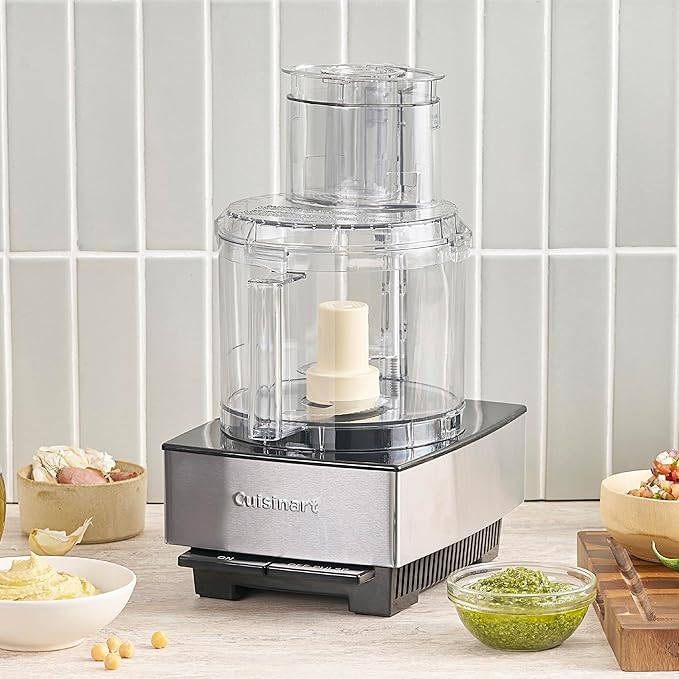
Cuisinart’s 14-cup bowl and stout motor plow through big jobs—onions for chili, a pound of cheddar, double pie crust—without bogging down. The extra-large feed tube and straightforward controls make it easy to get uniform slices and predictable dough. Rated at 14 cups with a 720-watt motor, it’s the traditional workhorse that just keeps going.
Pros
- Big 14-cup capacity handles party-size batches
- Strong, time-tested motor; simple on/off and pulse
- Wide feed tube reduces pre-cutting
Cons
- Heavier and taller than mid-size units
- Fewer “smart” programs; it’s manual by design
Ninja BN601 Professional Plus Food Processor
Tested by Me
Best for Home cooks who want power and presets without going full-size
Why We Like It
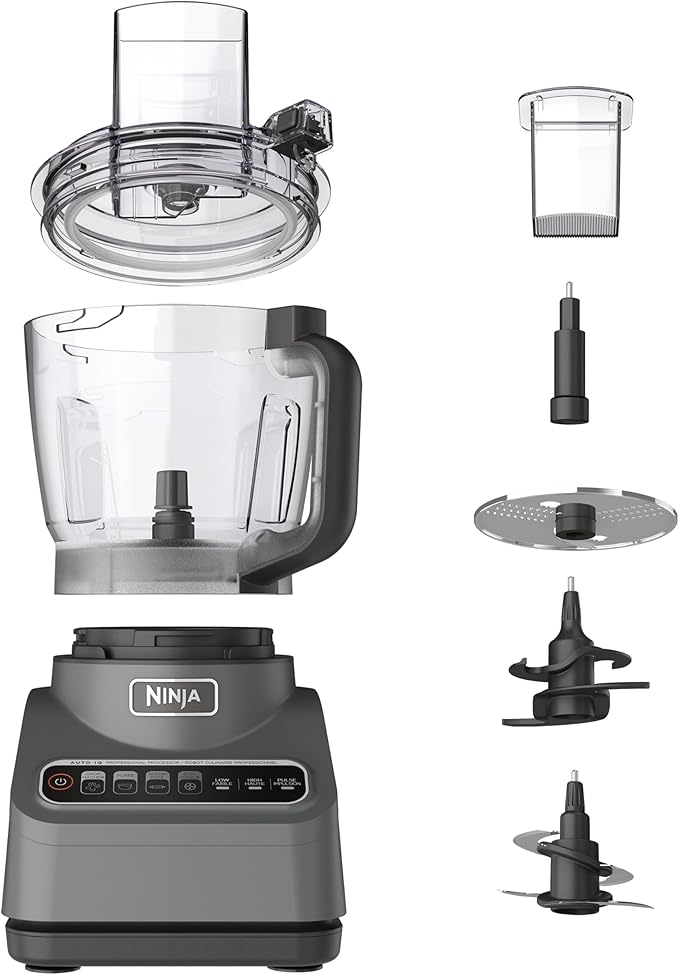
For a mid-size machine, the BN601 feels overbuilt—in a good way. The 1000-peak-watt motor, 9-cup bowl, and four one-touch programs (chop, purée, slice/shred, dough) sped through salsa and pie crust in my tests. It includes a chopping blade, dough blade, and reversible slicing/shredding disc—great coverage for most kitchens.
Pros
- Powerful motor with useful auto programs
- Generous 9-cup capacity in a smaller footprint
- Comes with multiple blades/disc out of the box
Cons
- Louder than the KitchenAid and Hamilton Beach
- Lid latch is snug; takes a beat to learn the feel
Hamilton Beach 70730 10-Cup Bowl Scraper Food Processor
Tested by Me
Best for Budget-minded cooks who want reliable basics
Why We Like It
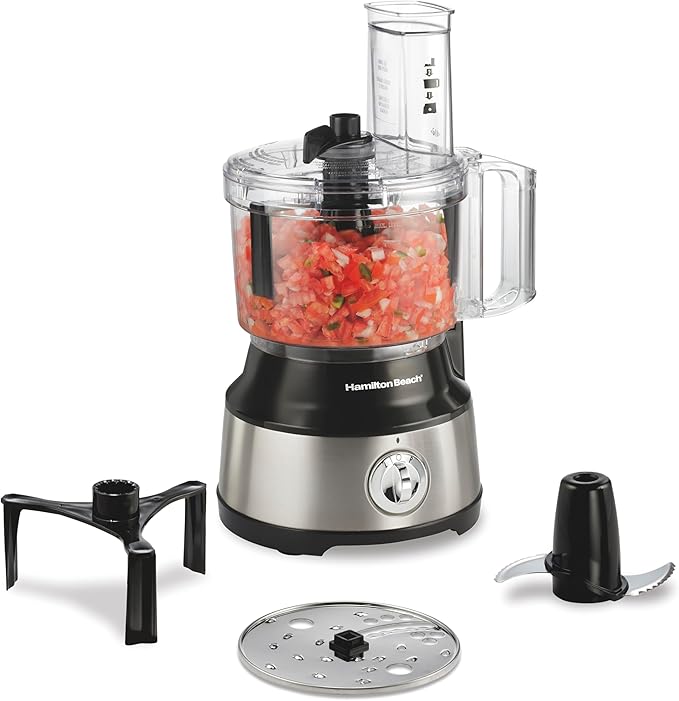
It’s the surprise value pick. The unique built-in bowl scraper saves time on pestos and thick dips, and the 10-cup bowl with a 450-watt motor handled weeknight chopping and shredding just fine in my tests. You get a chopping blade and a reversible slice/shred disc—the must-haves for everyday cooking.
Pros
- Bowl-scraper feature reduces stop-and-scrape moments
- Solid capacity for the price; simple controls
- Lightweight and easy to store
Cons
- Not ideal for frequent heavy doughs
- More plastic feel than pricier models
KitchenAid KFP0718CU 7-Cup Food Processor
Tested by Me
Best for Small kitchens and everyday prep for 1–2 people
Why We Like It
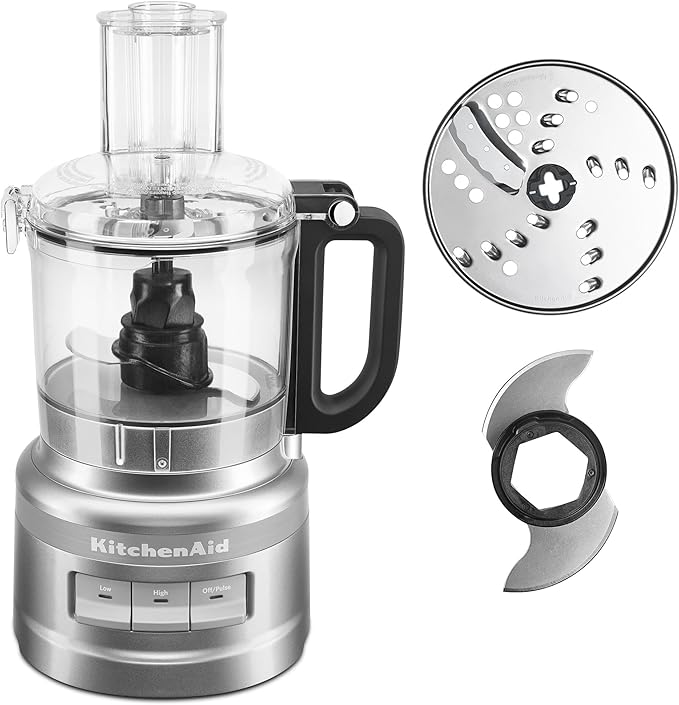
This is the “don’t overthink it” pick: a 7-cup bowl, straightforward High/Low/Pulse controls, and a reversible medium slicing/shredding disc. It’s quietest of the bunch, sets up fast, and tucks into a narrow cabinet. If you mainly chop veg, grate cheese, and whip small sauces, this is exactly enough machine.
Pros
- Compact, light, and quiet—great apartment pick
- Clean control layout; quick to assemble
- Ideal for daily chopping and shredding
Cons
- Small feed tube; more pre-cutting for long veg
- Not built for big dough batches
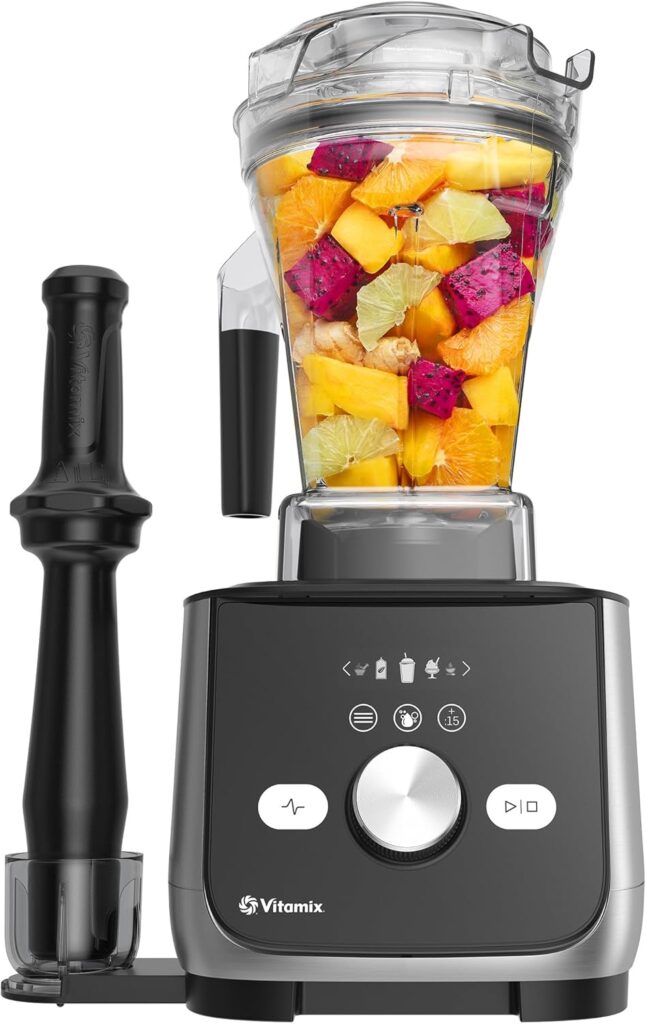
Vitamix Ascent X5 Blender
Tested by Me
Best for Blender-first users who still want to chop/purée and make nut butters
Why We Like It
While not a food processor, the Ascent X5 is a powerhouse for smoothies, soups, and nut butters, with 10 preset programs and a 48-oz container. In my trials, it handled sauces and purées beautifully; for shredding/slicing, you’d need a separate processor. Choose this if you’re consolidating appliances and do far more blending than slicing.
Pros
- Exceptional blending power and consistency
- Presets + self-cleaning make daily use easy
- Can take on many “processor-like” purée tasks
Cons
- Not a true food processor (no slicing/shredding discs)
- Pricey if you still need to buy a separate processor
Other Things to Consider
- Motor power and torque: If you knead dough weekly or grate hard cheeses often, look for ~700 watts and up (or a model with proven dough performance). The Cuisinart’s 720-watt motor is a classic example.
- Capacity: 7–9 cups suits most daily prep; 10–14 cups are best for bulk prepping and entertaining.
- Blades and discs: A metal chopping blade and a reversible slice/shred disc cover 90% of needs. Dough blades are nice if you bake often (Ninja includes one).
- Feed tube design: Wider tubes reduce pre-cutting; look for a pusher that keeps carrots and cucumbers stable for even slices.
- Cleanup: Simpler lids and fewer safety interlocks speed washing. Check that common parts are dishwasher-safe (top rack).
- Noise: Bigger motors can be louder; if that’s a concern, compact models like the KitchenAid tend to be a bit quieter in everyday use.
- Storage & weight: If you’re pulling it from a cabinet daily, lighter models are easier on the wrists; heavier, full-size units are more stable during tough jobs.
- Warranty & support: Consider brand reputation and parts availability for bowls, lids, and blades.
Frequently Asked Questions
What’s the practical difference between a food processor and a blender?
A food processor uses a wide, shallow work bowl with specialized discs and a chopping blade for slicing, shredding, chopping, kneading, and emulsifying. A blender uses a tall, narrow jar and excels at liquids and purées—smoothies, soups, sauces. Some blenders (like the Vitamix Ascent X5) can handle many purée tasks but cannot slice or shred without separate accessories.
How big should my food processor be?
For one or two people, 7–9 cups is usually perfect. For families or bulk meal prep, consider 10–14 cups so you’re not processing in multiple batches. The Cuisinart’s 14-cup bowl is ideal for doughs and big salads; the Ninja’s 9-cup hits the sweet spot for most tasks.
Can these machines make dough?
Yes—look for a sturdy motor and, ideally, a dough blade. The Ninja BN601 includes a dough blade and handled double pizza dough in testing; the Cuisinart’s torque did well with pie crusts and short doughs. For frequent bread doughs, a full-size model is the safer bet.
Are the parts dishwasher-safe?
Most removable parts on these processors are dishwasher-safe (top rack). Always confirm in the manual or listing; for example, the Cuisinart lists dishwasher-safe care for components, and the KitchenAid KFP0718 includes a simple, easy-clean set of parts.
I’m on a budget—what’s the best value?
The Hamilton Beach 70730 is typically the lowest-cost pick here while still offering a 10-cup bowl and a reversible disc; its bowl-scraper feature is genuinely useful for thick dips and pestos.
Conclusion
If you want a durable, do-everything classic, pick the Cuisinart DFP-14BCNY 14-Cup—it’s the most versatile for families and batch preppers. If you need power in a mid-size footprint with useful presets, choose the Ninja BN601 Professional Plus (9-Cup). Shopping on a budget? The Hamilton Beach 70730 10-Cup Bowl Scraper nails everyday tasks for less. For smaller kitchens and quieter operation, the KitchenAid KFP0718CU 7-Cup is the just-right size. And if you truly blend more than you process but still want to make sauces and purées, the Vitamix Ascent X5 Blender is the high-power alternative—just remember it’s not a slicer/shredder.


Leave a Reply