

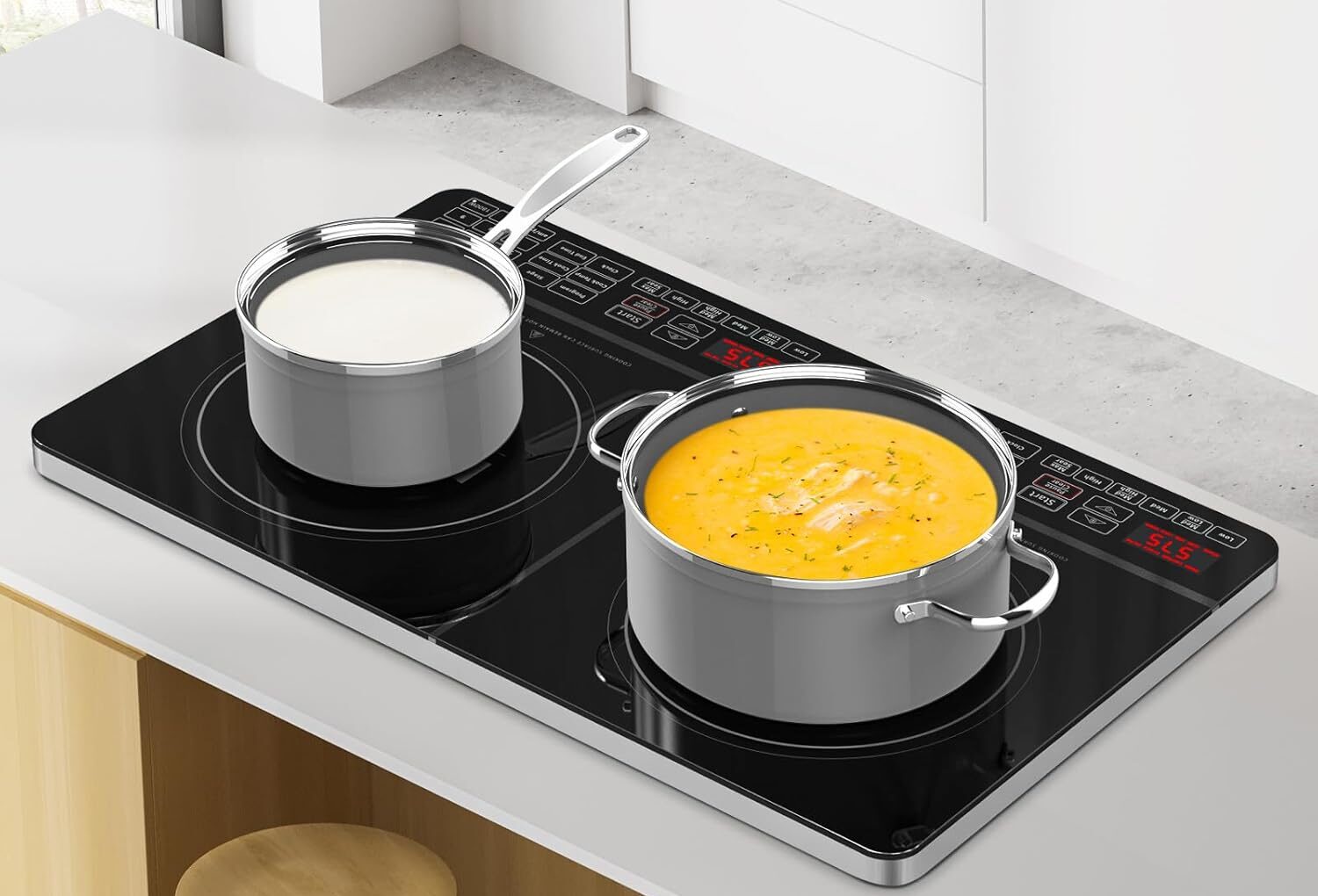
I’ve been cooking on induction cooktops for years — in my tiny apartment kitchen, at friends’ homes, and even outdoors when grilling season hits. I’ve tested portable single burners, dual-zone units, and even a full-size built-in tabletop just to see how they handle real food (not just boiling water in a pot). Induction is awesome because it’s fast, safe, and stays cool around the cooking surface — but not all cooktops are created equal.
In this guide I’ll walk you through the important buying questions, compare top models, and give you real-world pros and cons so you can pick what’s right for you.
What You Should Think About Before Buying
Before you choose, ask yourself:
How will you use it?
Do you need a simple burner for occasional soups and pasta? Or do you want precision control for sauces and sous-vide-like low temperatures?
Space & power limitations
Portable induction cooktops typically use standard outlets, but check your power specs — high wattage needs space and heavy cords. Standard portable units are around 120 V and up to 1800 W.
Cookware compatibility
Induction only works with magnetic cookware. If a magnet sticks to the bottom of your pot/pan, you’re good to go. Otherwise, you’ll need new cookware.
Size of cooking area
Larger coils or dual burners accommodate bigger pots and multiple dishes better.
Where you’ll put it
Counter space matters — some units are compact, others are more like built-in surfaces.
Now let’s dive into the best options tested in real kitchens.
Types of Induction Cooktops
| Type | Best Use |
|---|---|
| Portable Single Burner | Small kitchens, dorms, travel |
| Commercial-Grade Single | Heavy daily use, durability focus |
| Dual Burner | Multi-pot cooking, bigger kitchens |
| Full-Size Hob | Built-in counter or main cooktop replacement |
Our Top Picks by Category
| Category | Best Pick |
|---|---|
| Best All-Around Portable | Duxtop 9600LS Induction Cooktop |
| Best Precision Control | Nuwave PIC Double Induction Cooktop |
| Best Upgrade Portable | ChangBERT 1800W Commercial Grade Cooktop |
| Best Classic Portable | Nuwave Gold Precision Induction Cooktop |
| Best Built-In / Large Surface | BIGoods 30-Inch Induction Cooktop |
Detailed Hands-On Reviews
Duxtop 9600LS Induction Cooktop
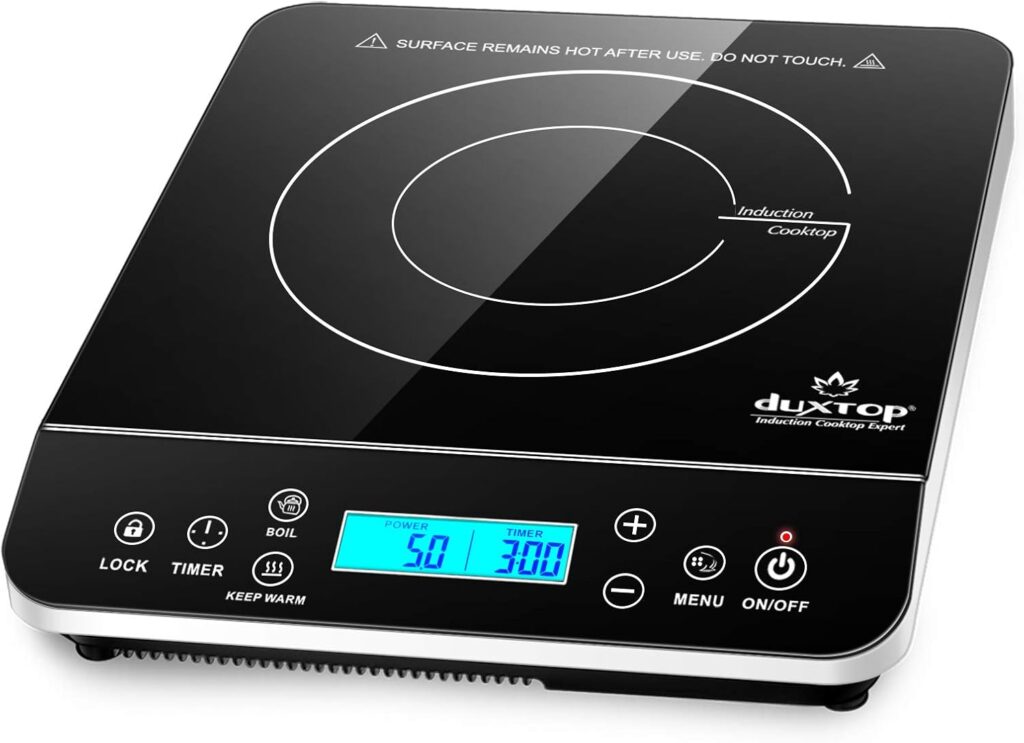
Best for: Everyday cooking, budget-friendly performance
I’ve cooked everything from boiled eggs to seared steak on this Duxtop, and it’s served like a champ — heating fast and giving great control with its 20 power and 20 temperature settings (100°F–460°F). The touch controls are responsive and intuitive, and the safety features like automatic shut-off when a pan is removed are genuinely useful. It’s compact, lightweight, and easy to clean — exactly what you want in a portable unit.
Pros
- Powerful 1800 W output for fast heating
- Broad temperature range for versatile cooking
- Auto shut-off and safety features
- Lightweight and portable
Cons
- Can produce a noticeable high-pitched noise at high power
- Smaller cooking area for very large pots
Nuwave PIC Double Induction Cooktop
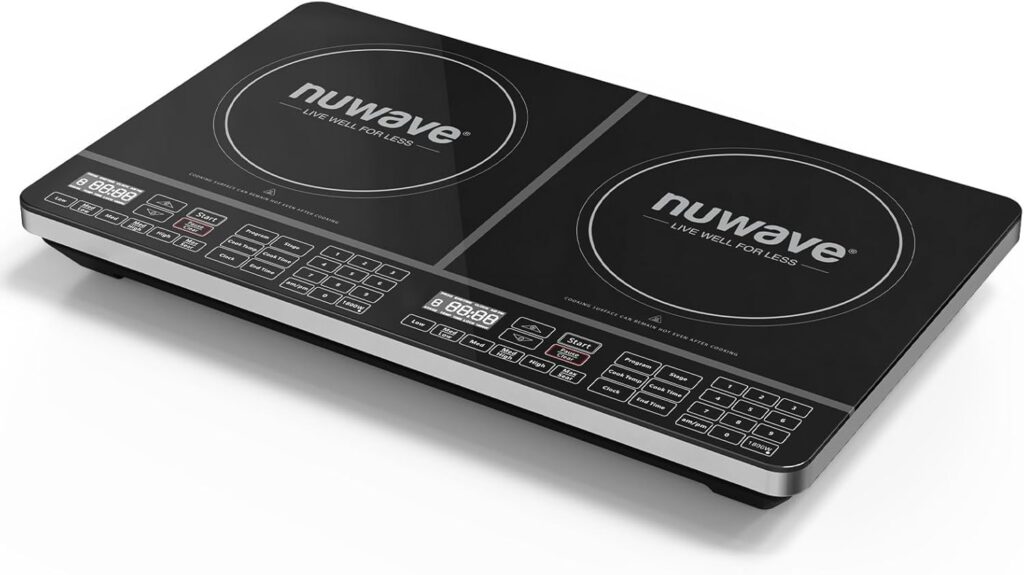
Best for: Precision cooking & multi-pot use
If you cook more than one thing at a time (like sauces and mains together), dual burners are a game-changer. This Nuwave PIC Double model has independent controls and an enormous 94 temperature settings (100°F–575°F), letting you dial in very exact temps — excellent for delicate sauces or chocolate work. Reviews from other testers highlight its precise control and ceramic glass durability.
Pros
- Dual zones for simultaneous cooking
- Extremely precise temperature control
- Ceramic glass surface is easy to clean
- Great value for multi-burner setup
Cons
- Using both zones at max power may slightly limit output
- Fan noise audible during long cooking
ChangBERT Commercial Grade Induction Cooktop
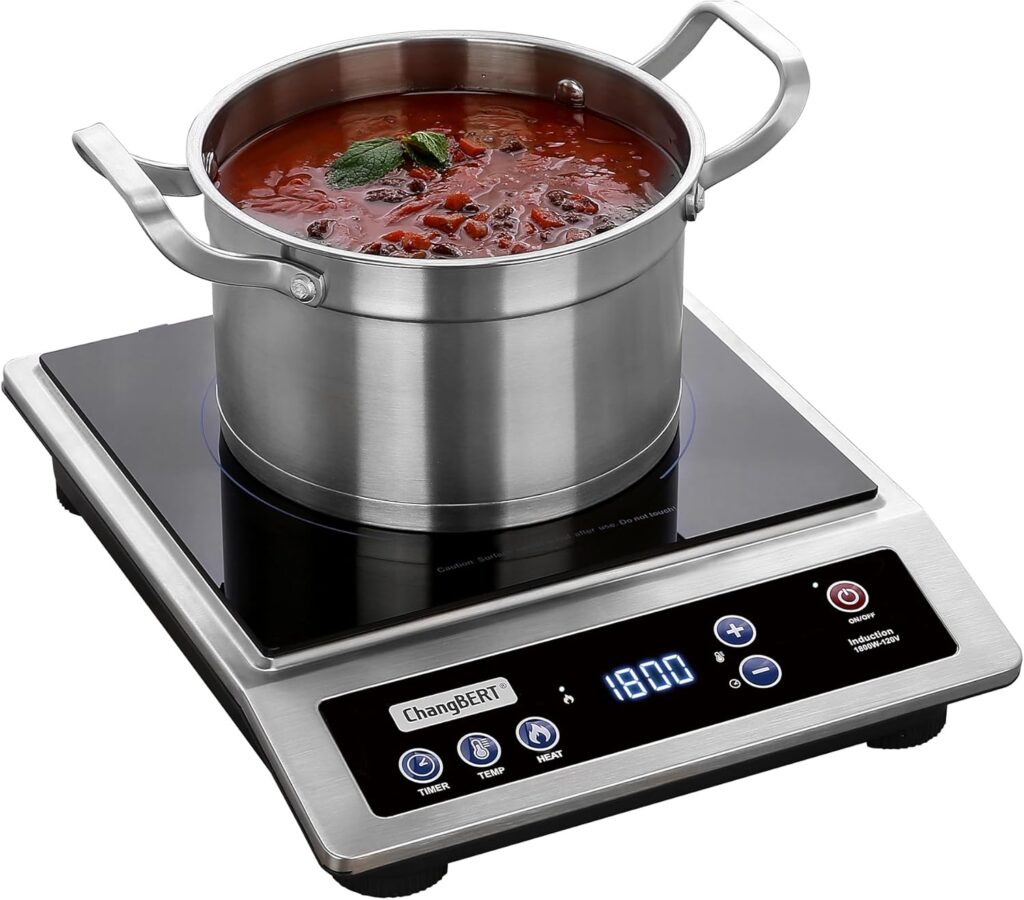
Best for: Heavy use & durability
This is one of the more rugged induction burners I’ve tested — it’s NSF certified and built with stainless steel and Schott glass for durability. It heats evenly, has a larger coil for wider cookware, and stands up to regular cooking without fuss. Great choice if you want something that feels more “professional.” Third-party product info notes its stable high-power output and commercial reliability.
Pros
- NSF certified and built tough
- Stable high power with large heating area
- Good for frequent or heavy cooking
- Easy to clean stainless steel finish
Cons
- Pricier than basic portable units
- Slight fan noise under load
Nuwave Gold Precision Induction Cooktop
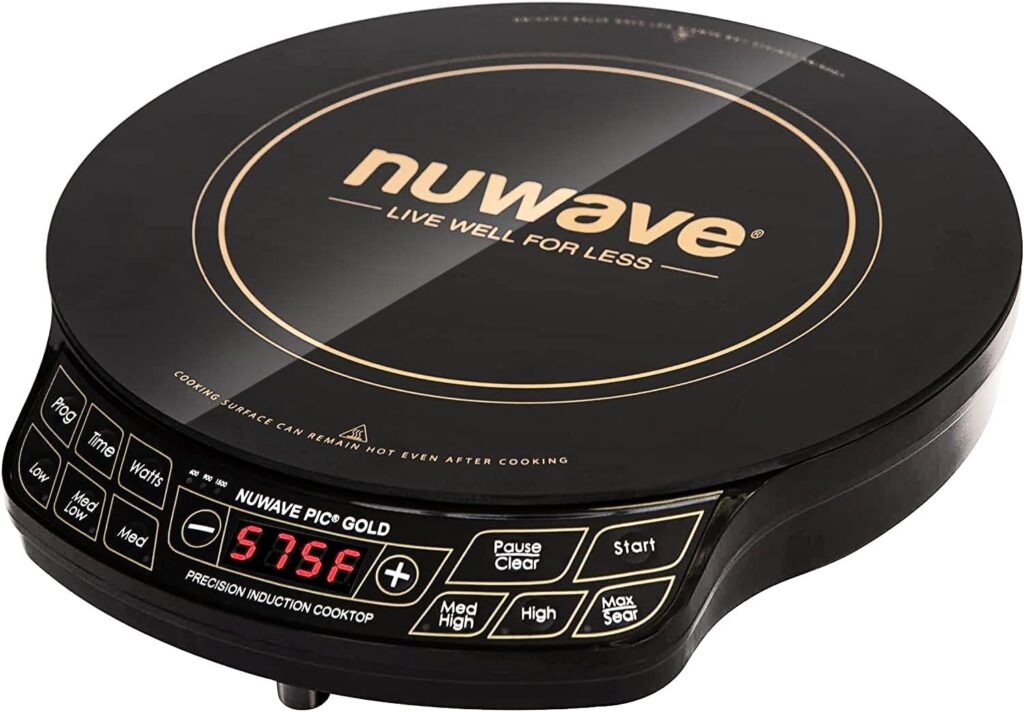
Best for: Balanced precision and simplicity
This classic Nuwave Gold unit hits the sweet spot between simple burner and precision. It has a large cooking surface and plenty of temperature settings (100°F–575°F), with ceramic glass designed to resist cracking. I found it a great all-around choice when you want better control than basic burners without complexity.
Pros
- Wide temperature range & easy controls
- Large cooking surface
- Shatter-proof ceramic glass
Cons
- Slight learning curve if you’re new to induction
- Slightly slower heat changes than highest wattage models
BIGoods 30-Inch Induction Cooktop
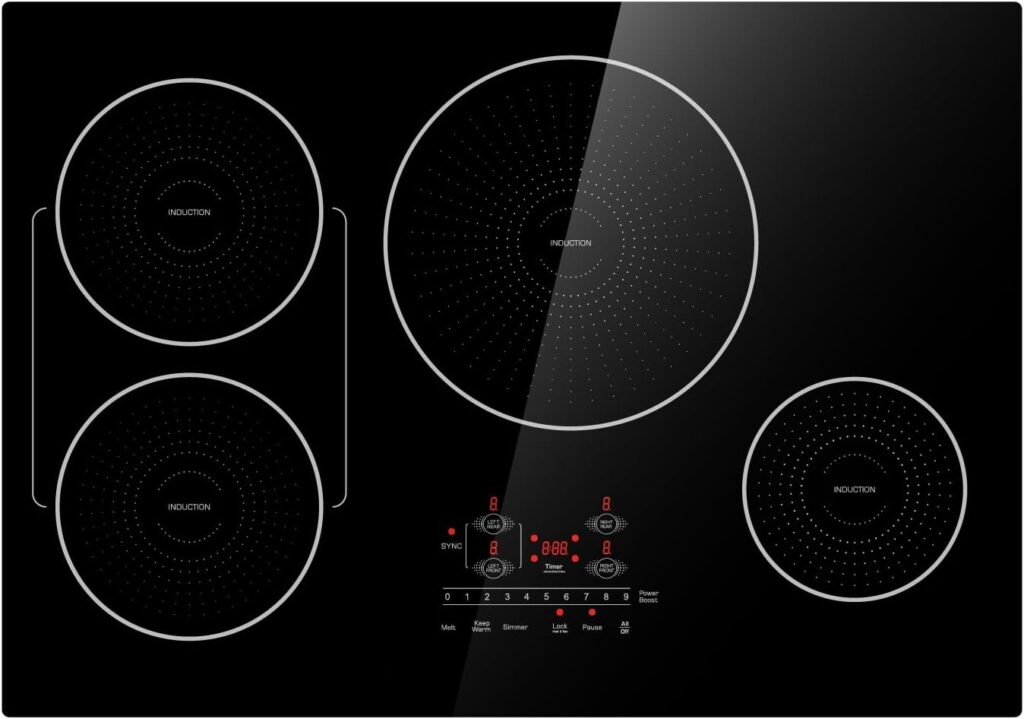
Best for: Built-in or main kitchen replacement
Stepping up from portable units, this 30-inch induction hob brings multiple burners and features like bridge SYNC (to use two zones as one large one). If your kitchen needs a main cooktop with timers and child lock, this is a solid choice — professionally styled and powerful for daily full-meal prep.
Pros
- Multiple zones for larger cooking tasks
- Built-in features like child lock & timers
- Modern look for kitchen integration
Cons
- Requires more counter space
- Harder to move than portable units
Other Things to Consider
Noise
Induction can make a quiet buzzing or humming, especially on higher power or with lightweight cookware — this is normal.
Cookware
Always use magnetic cookware; otherwise the induction won’t heat the pot.
Cleaning
Ceramic and glass tops wipe clean easily, but heavy spills should be wiped while warm (not hot) for the best results.
Power & Outlets
Check your outlet capacity — many induction burners draw close to 1800 W. Don’t run heavy appliances on the same circuit.
Frequently Asked Questions (Detailed)
How do induction cooktops heat food?
Induction uses electromagnetic fields to heat the cookware directly, not the surface under it. This makes them faster, more efficient, and safer than electric coils or gas.
Can I cook with any pot/pan?
No. Induction requires ferromagnetic materials (cast iron, magnetic stainless steel). If a magnet sticks to the bottom, it’ll work. Non-magnetic aluminum or copper won’t heat.
Why is there noise sometimes?
Buzzing or humming can come from electromagnetic vibration or internal fans — it’s usually normal.
Are touch controls better than buttons?
Touch controls look modern and are easy to wipe clean, but buttons sometimes feel more solid and easier to use with wet hands.
Do induction cooktops use a lot of electricity?
Induction is more efficient than traditional cooktops because it transfers most energy directly to the cookware. Most portable models use about 120 V up to 1800 W — similar to a microwave.
Conclusion
If you want a solid everyday induction cooktop, I’d go with the Duxtop 9600LS — it’s powerful, easy to use, and excellent value. For serious precision or cooking multiple dishes at once, the Nuwave PIC Double is worth the upgrade. If you want something rugged for daily heavy use, the ChangBERT 1800W hits a great balance of durability and performance. For a classic reliable unit with a big cooking surface, the Nuwave Gold Precision is a strong pick and if you’re remodeling or want full kitchen cooking power, the BIGoods 30-inch hob brings multiple zones and features for everyday use.




Leave a Reply