

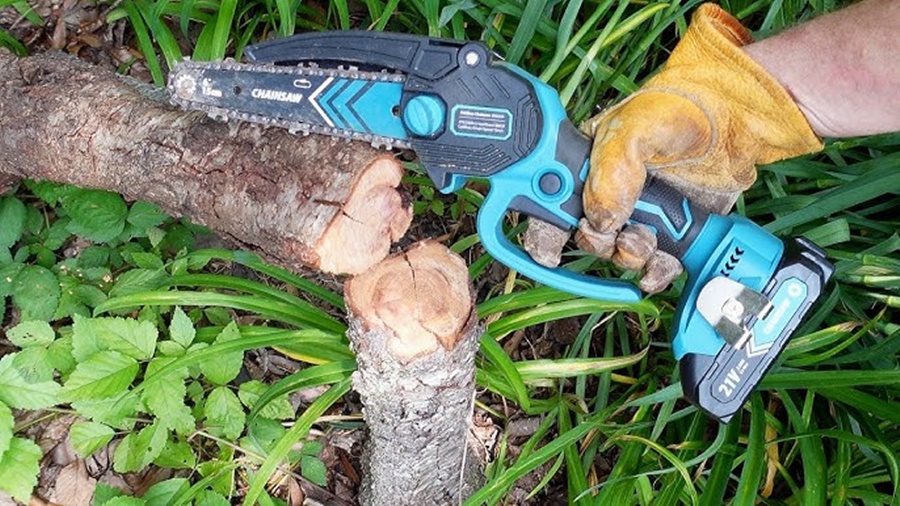
Chainsaws are essential tools for cutting wood, trimming trees, and maintaining yards. Among modern options, electric chainsaws and battery (cordless) chainsaws are the most popular alternatives to traditional gas models. While they may look similar, their power source and performance differ in important ways.
This article provides a full, clear comparison to help you understand which type is better suited to different needs.
What Is an Electric Chainsaw?
An electric chainsaw runs on electricity supplied through a power cord connected to a wall outlet. It delivers consistent power as long as it remains plugged in.
Electric chainsaws are commonly used for light to medium-duty work near homes, such as cutting firewood, trimming branches, and small tree removal.
What Is a Battery Chainsaw?
A battery chainsaw (also called a cordless chainsaw) runs on a rechargeable lithium-ion battery. It offers greater mobility since it does not require a power cord.
Battery chainsaws are designed for convenience, portability, and moderate cutting tasks, especially in areas without easy access to electricity.
Power and Performance
Electric Chainsaw
- Provides constant and steady power
- No power loss over time while plugged in
- Handles continuous cutting better
- Often slightly stronger for long tasks
Battery Chainsaw
- Power depends on battery charge
- Performance may decrease as battery drains
- Modern batteries offer impressive cutting ability, but runtime is limited
Winner: Electric chainsaw for sustained power
Portability and Mobility
Electric Chainsaw
- Limited by cord length
- Requires extension cords for larger areas
- Cord can restrict movement
Battery Chainsaw
- Fully cordless
- Easy to carry and maneuver
- Ideal for remote or outdoor locations
Winner: Battery chainsaw for mobility
Convenience and Ease of Use
Electric Chainsaw
- Plug in and start
- No charging required
- Setup can be inconvenient if outlets are far away
Battery Chainsaw
- Simple start with a charged battery
- No cords to manage
- Requires planning for battery charging
Winner: Battery chainsaw for convenience
Maintenance Requirements
Electric Chainsaw
- Minimal maintenance
- No fuel, no spark plugs, no engine servicing
- Mostly limited to chain sharpening and lubrication
Battery Chainsaw
- Low maintenance
- Battery health must be monitored
- Batteries may need replacement after several years
Winner: Tie (both are low-maintenance)
Runtime and Working Time
Electric Chainsaw
- Unlimited runtime while plugged in
- Suitable for longer projects
Battery Chainsaw
- Runtime limited by battery capacity
- Extra batteries extend work time but add cost
Winner: Electric chainsaw for long jobs
Noise and Environmental Impact
Electric Chainsaw
- Quiet compared to gas models
- Zero direct emissions
Battery Chainsaw
- Also very quiet
- Environmentally friendly
- Battery manufacturing and disposal have some environmental impact
Winner: Tie (both are eco-friendly and quiet)
Cost Comparison
Electric Chainsaw
- Generally lower upfront cost
- No batteries to replace
- Cheaper long-term investment
Battery Chainsaw
- Higher initial price
- Extra batteries increase cost
- Long-term cost depends on battery lifespan
Winner: Electric chainsaw for budget buyers
Best Use Cases
Choose an Electric Chainsaw If:
- You work close to a power source
- You need continuous power
- You want a lower-cost option
- You handle longer cutting sessions
Choose a Battery Chainsaw If:
- You need portability
- You work in areas without electricity
- You want freedom of movement
- You prefer quick, simple setup
Conclusion
Both electric chainsaws and battery chainsaws are excellent modern alternatives to gas-powered models, but they serve different purposes. An electric chainsaw is the better choice for users who need continuous, reliable power and work close to a power source. It offers longer working time, consistent performance, and lower overall cost, making it ideal for extended cutting tasks around the home.
On the other hand, a battery chainsaw excels in portability and convenience. Its cordless design allows easy movement and access to remote areas, making it perfect for light to medium tasks where flexibility and ease of use are priorities. Although runtime is limited by battery capacity, advances in battery technology have significantly improved performance.





Leave a Reply