


A high-quality cutting board can range from $20 to several hundred dollars, depending on the material and design. For chefs, the best options balance durability and functionality, showcasing features tailored for everything from daily meal prep to intricate plating tasks.
When choosing a cutting board, consider the material first. Wooden cutting boards, especially made from hardwoods like maple or walnut, are gentle on knives and naturally antimicrobial. However, plastic cutting boards are often preferred for their ease of cleaning and stain resistance.
Additionally, think about the size and thickness you need, as a larger board can accommodate bigger tasks, while a thicker board often lasts longer. Finally, evaluate how you plan to clean your cutting board; some materials may require special care to maintain their quality.
Featured in this article




1. Winco Cutting BoardBest All-Around Choice
The Winco Cutting Board stands out for its stain-resistant and non-porous surface, making it an ideal choice for chefs who prioritize cleanliness. It’s dishwasher safe, meaning you can quickly clean up after a busy meal prep session. Being durable enough for both hot cooking tasks and heavy-duty use, this board doesn’t shy away from daily challenges.
Why we picked it: Its durability and easy cleanup make it far superior to softer, more porous materials that can trap odors and bacteria. Plastic boards can be a hit or miss, but this one consistently meets expectations.
Not ideal for: Chefs who prefer the aesthetic and knife-friendly benefits of wood cutting boards might want to look elsewhere.
Winco Cutting Board
Best for: Home cooks seeking durability and cleanliness
- Stain-resistant and non-porous surface
- Dishwasher safe for easy cleanup
- Great for hot cooking tasks
- Can slide around on counters
- Limited color options available
2. Thirteen Chefs 18×12 White Cutting BoardBest for Grill Masters
With its exceptional juice groove design, the Thirteen Chefs Cutting Board is perfect for those who frequently tackle large meat cuts. This commercial-grade board is sturdy and designed to handle the rigors of barbecue preparation with ease.
Why we picked it: The juice groove efficiently channels away liquids, keeping your workspace cleaner compared to traditional boards where liquids can make a mess. For those who love grilling, this feature is invaluable.
Not ideal for: If you’re short on counter space, its larger size may be a drawback, particularly in smaller kitchens.

Thirteen Chefs 18×12 White Cutting
Best for: Grill masters and BBQ enthusiasts
- Excellent juice groove design
- Sturdy and commercial-grade quality
- Perfect size for large cuts
- Not ideal for serrated knives
- Shows wear with heavy use
3. Titanium Cutting BoardBest for Versatile Cooking
The Titanium Cutting Board offers a unique odor and stain-resistant surface, setting it apart from more traditional options. It features separate sides designated for different foods, enhancing food safety and convenience.
Why we picked it: You can easily switch between meat and vegetables without worrying about cross-contamination, making this board ideal for versatile meal prep. Its lightweight yet durable construction also makes it easy to handle.
Not ideal for: Those who prefer the aesthetic appeal of wood may find this choice to be less visually appealing.
Titanium Cutting Board
Best for: Chefs needing versatile cooking tools
- Odor and stain-resistant surface
- Easy to clean and maintain
- Separate sides for different foods
- Smaller than expected size
- Not suitable for heavy chopping
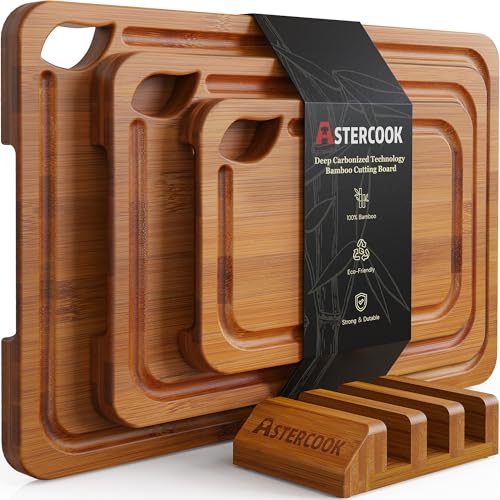
4. Astercook Deep Cutting BoardBest for Eco-Conscious Cooks
Astercook‘s Deep Cutting Board has a space-saving design with a stand that is useful for small kitchens. The deep grooves prevent messy spills, allowing for a more organized cooking experience, which is especially handy during assemblies of larger dishes.
Why we picked it: Its eco-friendly materials speak to environmentally conscious cooks looking for sustainable options. The deep grooves help manage larger items with ease, which many boards don’t.
Not ideal for: If you’re looking for a traditional board aesthetic, this one is more functional than fashionable.
Astercook Deep
Best for: Eco-conscious cooks seeking variety
- Space-saving design with stand
- Deep grooves prevent messy spills
- Durable and gentle on knives
- Requires regular oiling upkeep
- Can warp if soaked too long
5. American Walnut Wood Cutting BoardBest for Style and Quality
The American Walnut Cutting Board is not just practical but also an elegant addition to any kitchen. Its beautiful design and craftsmanship make it exceptional for both serving and chopping tasks. Plus, its sturdy and reversible nature adds to its multifunctionality.
Why we picked it: The dark hue and smooth surface preserve the integrity of your knife’s edge while also adding an aesthetic touch to your kitchen. Wood is often preferred for its ability to self-heal from knife marks.
Not ideal for: If you require a dishwasher-safe option, this wood board necessitates hand washing to maintain its finish and longevity.
American Walnut Wood Cutting Board
Best for: Stylish chefs who value quality
- Beautiful design and craftsmanship
- Excellent for serving and chopping
- Sturdy and reversible for versatility
- Requires careful cleaning methods
- Can be heavy to handle
6. Ironwood Gourmet Cutting BoardBest for Home and Professional Use
The Ironwood Gourmet Cutting Board features gorgeous acacia wood in a durable end-grain construction. This type of design is not only pleasing to the eye but also kinder to your knives, reducing wear over time.
Why we picked it: The end grain absorbs knife impact better than edge grain boards, meaning you won’t dull your knives as quickly. It’s perfect for those who appreciate a good-looking and functional kitchen tool.
Not ideal for: If you’re on a tighter budget, you might find this board to be on the higher end.
Ironwood Gourmet
Best for: Ideal for both home and professional chefs
- Beautiful acacia wood design
- Durable end grain construction
- Great for multiple food types
- Requires regular oiling
- Hand wash only, no dishwasher
7. GORILLA GRIP BPA-Free Cutting BoardBest for New Cooks
This durable and lightweight cutting board is an excellent entry point for those just starting their cooking journey. Its non-slip grip minimizes movement, making it safer to chop various ingredients without the fear of it sliding around.
Why we picked it: The affordability coupled with easy maintenance makes it a practical choice for beginners. You can toss it in the dishwasher without a second thought.
Not ideal for: For those who are serious about cooking and looking to invest in high-end materials, this may feel too basic.
GORILLA GRIP BPA
Best for: Perfect for new and experienced cooks
- Durable and lightweight design
- Non-slip grip minimizes movement
- Dishwasher safe for easy cleaning
- Plastic material may stain
- Not as aesthetically pleasing as wood
How to Choose the Best Cutting Board
Material Matters
Choosing the right material is crucial. Wooden cutting boards are gentle on your knives and have natural antibacterial properties. Bamboo boards are eco-friendly and quite sturdy, while plastic ones are stain and odor resistant, making them highly functional in busy kitchens.
Size and Thickness
Consider your kitchen space and what types of meals you prepare. Larger boards afford more space for multi-ingredient tasks but can be cumbersome to store. Thicker boards generally provide greater longevity but can be heavier to maneuver.
Maintenance Needs
Evaluate how much effort you’re willing to put into maintaining your cutting board. Wooden boards often require oiling to prevent cracking, while plastic boards can typically just be tossed in the dishwasher. If you want something low-maintenance, plastic might be your best bet.
Price vs. Quality
There’s always a balance between price and quality. Investing in a higher-quality board often means it will last longer and perform better. For instance, although the American Walnut Wood Cutting Board may come at a higher price, its durability and aesthetics make it worthwhile in the long run.
If you’re also interested in wood cutting tools, I have a detailed guide on that here.
Frequently Asked Questions
What cutting board do professional chefs use?
Many professional chefs recommend the Winco Cutting Board for its durability and functionality. Other popular choices include the American Walnut Wood Cutting Board and the Ironwood Gourmet, which are favored for their aesthetics and performance.
Why are wooden cutting boards better for chefs?
Wooden cutting boards, like the American Walnut Wood Cutting Board, are known for their ability to be gentler on knives, helping to maintain their sharpness. Additionally, they have natural antibacterial properties and can add a touch of elegance to a kitchen.
How do chefs maintain their cutting boards?
Chefs maintain their cutting boards by regularly cleaning them with mild soap and water and ensuring they dry completely to prevent warping. It is also recommended to periodically oil wooden boards, such as the American Walnut Wood Cutting Board, to preserve the wood and prevent cracking.
Can bamboo cutting boards be used by chefs?
While the article does not specifically mention bamboo cutting boards, chefs often choose materials like those listed above for their qualities. However, if a chef prefers bamboo, it should be noted that it can be harder on knives compared to wood.
Is plastic or wood better for cutting boards?
The article leans towards recommending wood cutting boards, such as the Ironwood Gourmet, for their advantages in knife care and aesthetics. However, plastic cutting boards, like the GORILLA GRIP BPA, are also popular for their ease of cleaning and durability.




Leave a Reply