

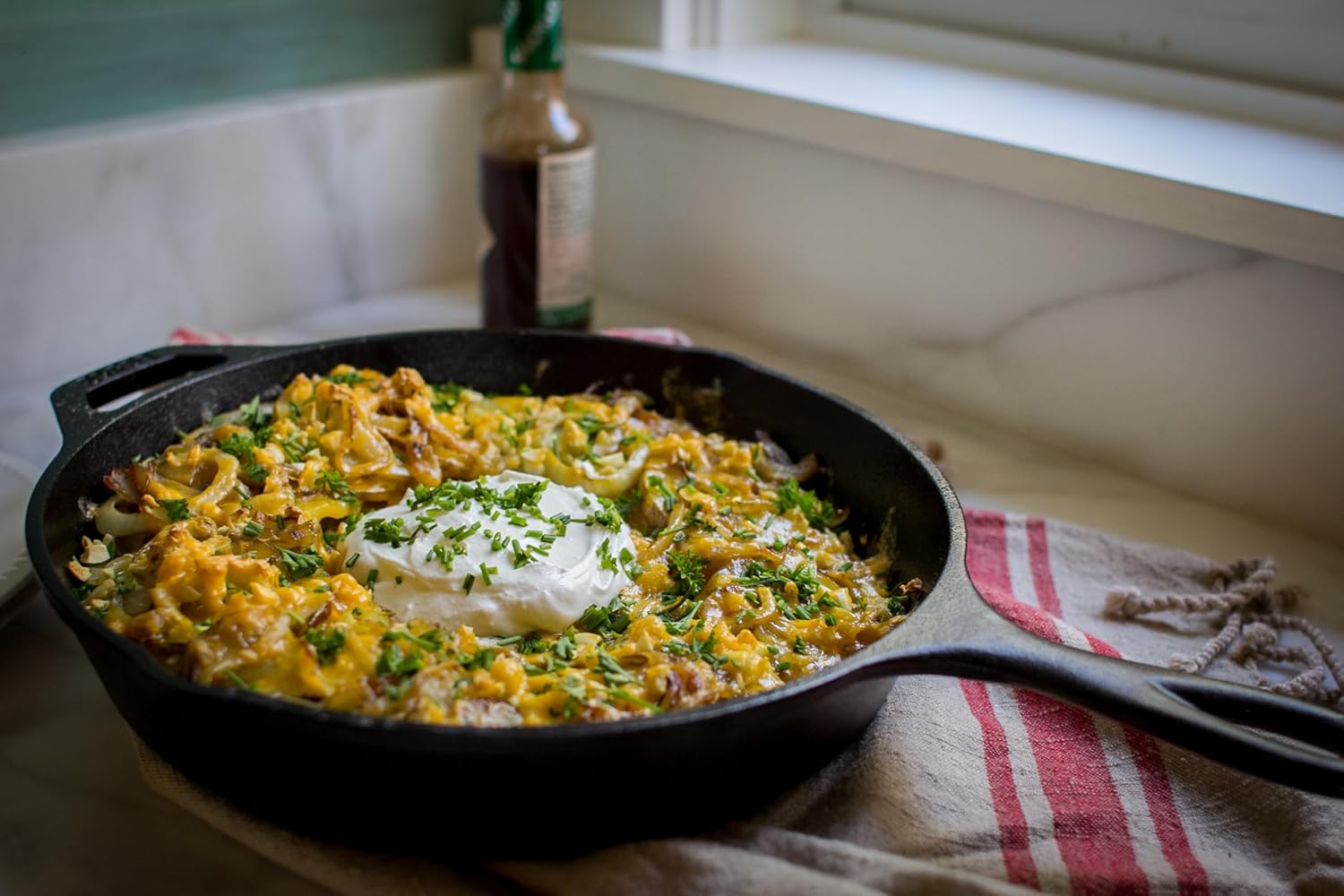
Best Cast Iron Skillet: Tested 5 Pans revealed that these versatile tools excel in heat retention and seasoning, making them a top choice for searing meat and baking. Initially, I doubted their practicality, associating them with outdated cooking methods. However, after tasting a perfectly cooked ribeye from a cast iron skillet, I quickly realized their undeniable value in the kitchen.
Over the past several months, I’ve been cooking with five different cast iron skillets across my home kitchen — everything from eggs and cornbread to deep-fried chicken and seared fish. I cooked on a gas range, an electric flat-top, and yes, even a campfire.
I paid attention to how fast each pan heated up, how evenly it distributed heat, how easy it was to clean, and whether the seasoning held up over time with regular use.
What I found out is that not all cast iron is created equal. Price matters sometimes, but not always in the way you’d expect. The most expensive pan wasn’t always the best performer in the kitchen. The budget option surprised me. And there’s one pan on this list that I genuinely think is built to be passed down to your kids.
Let me walk you through everything.
Quick Buying Guide: Questions to Ask Before You Choose
Before you drop any money on a cast iron skillet, stop and think through these questions. They’ll save you from buying the wrong thing.
What size do I actually need? A 10-inch pan works for one to two people. A 12-inch is the sweet spot for most home cooks. If you’re cooking for a crowd or doing whole-chicken roasts, go bigger.
Do I want to deal with seasoning maintenance? Raw cast iron (like Lodge or Stargazer) needs occasional re-seasoning and hand washing. Enameled cast iron (like Le Creuset) requires zero seasoning and is more forgiving on cleanup.
How heavy can I handle? Cast iron is genuinely heavy. A 12-inch skillet can weigh anywhere from 6.5 to 9 pounds. If you have wrist issues or you’re buying for someone elderly, lighter-weight or smaller-size options matter.
What’s my budget? You can get a great cast iron skillet for under 30 dollars or spend close to 400 dollars on a premium piece. Both can cook fantastic food — the difference is in the surface finish, weight, durability design, and country of manufacture.
Will I use it outdoors? If you camp or grill a lot, raw cast iron is your best friend. Enameled cast iron can be damaged by open flame or extreme temperature swings.
Am I looking for a set or a single pan? Some options on this list come with lids, which turns them into a hybrid Dutch oven situation — great value if you want versatility.
Types of Cast Iron Skillets
| Type | Best For | Maintenance Level | Price Range |
|---|---|---|---|
| Raw/Seasoned Cast Iron | Everyday cooking, camping, searing | Medium (needs re-seasoning) | $20 – $150 |
| Enameled Cast Iron | Easy cleanup, no-seasoning cooking | Low (no seasoning needed) | $100 – $400+ |
| Deep Cast Iron Skillet with Lid | One-pot meals, braising, frying | Medium | $40 – $120 |
| Machined/Polished Cast Iron | Better release, premium performance | Medium (season builds faster) | $100 – $200 |
| Budget Cast Iron Sets | Multi-size versatility, beginners | Medium | $25 – $60 |
Our Top Picks by Category
| Product | Category | Price Range | Rating |
|---|---|---|---|
| Lodge 10.25″ Pre-Seasoned Cast Iron Skillet (L8SK3) | Best Overall / Budget Pick | $20 – $30 | 9.5/10 |
| Cuisinel 12″ Pre-Seasoned Cast Iron Skillet | Best Budget Set Value | $25 – $45 | 8.5/10 |
| Stargazer 12-Inch Cast Iron Skillet | Best Premium American-Made | $140 – $150 | 9.7/10 |
| Lodge L10CF3 5 Qt. Deep Covered Cast Iron Skillet | Best for Deep Frying and Braising | $55 – $75 | 9.2/10 |
| Le Creuset Signature Enameled Cast Iron Skillet 11.75″ (Marseille) | Best Enameled / Best for Gift | $280 – $350 | 9.4/10 |
Detailed Hands-On Reviews
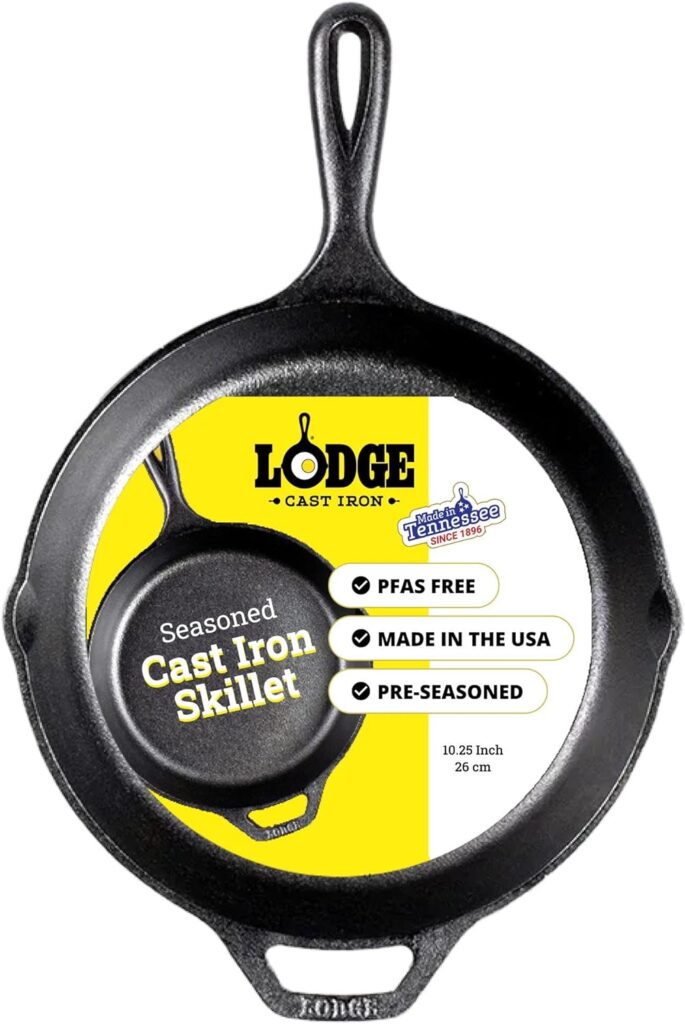
1. Lodge 10.25″ Pre-Seasoned Cast Iron Skillet (L8SK3)
Best For: Everyday home cooks, beginners, people who want a reliable workhorse without spending much
Why We Like It
Lodge has been making cast iron since 1896 in South Pittsburg, Tennessee. The L8SK3 is the pan that’s been sitting in American kitchens — and on campfire grates — for generations. And there’s a reason it’s still the most-sold cast iron skillet on Amazon.
I cooked eggs, bacon, cornbread, and seared chicken thighs in this pan over six weeks. The pre-seasoning that comes from the factory is legitimately usable out of the box — you don’t have to do any extra work before your first cook.
The heat retention is what you’d expect from cast iron: slow to heat up, but once it’s hot, it stays hot and holds that heat evenly across the surface.
The teardrop handle design is iconic for a reason. It feels natural in the hand, and the dual pour spouts on both sides of the rim are genuinely useful when draining fat or pouring sauces. At just over 5 pounds for the 10.25-inch size, it’s manageable for most people.
The one thing to know is that Lodge uses a rough casting texture rather than a machined finish. Some people don’t love that, because food can stick a little more until the pan builds seasoning through use. But honestly, after about three to four weeks of regular cooking and proper care, mine developed a noticeably smoother and more non-stick surface naturally.
At its price point — under 30 dollars — there is simply no competition. This is the pan I’d recommend to anyone just getting started with cast iron.
Pros
- Made in the USA with a 125-year track record
- Comes pre-seasoned with 100% natural vegetable oil, ready to use immediately
- Works on all cooktops including induction, gas, electric, and ceramic
- Oven safe and campfire safe
- Dual pour spouts on both sides for easy draining
- Extremely affordable — one of the best value buys in cookware
- Naturally non-stick finish that improves the more you cook with it
- Compatible with metal utensils
Cons
- The rough casting texture means food sticks more than polished pans until seasoning builds up
- Gets heavy when fully heated — can be hard to maneuver one-handed
- Handle gets very hot on the stovetop, needs oven mitt or silicone handle cover
- No lid included
- Requires hand washing and occasional re-seasoning
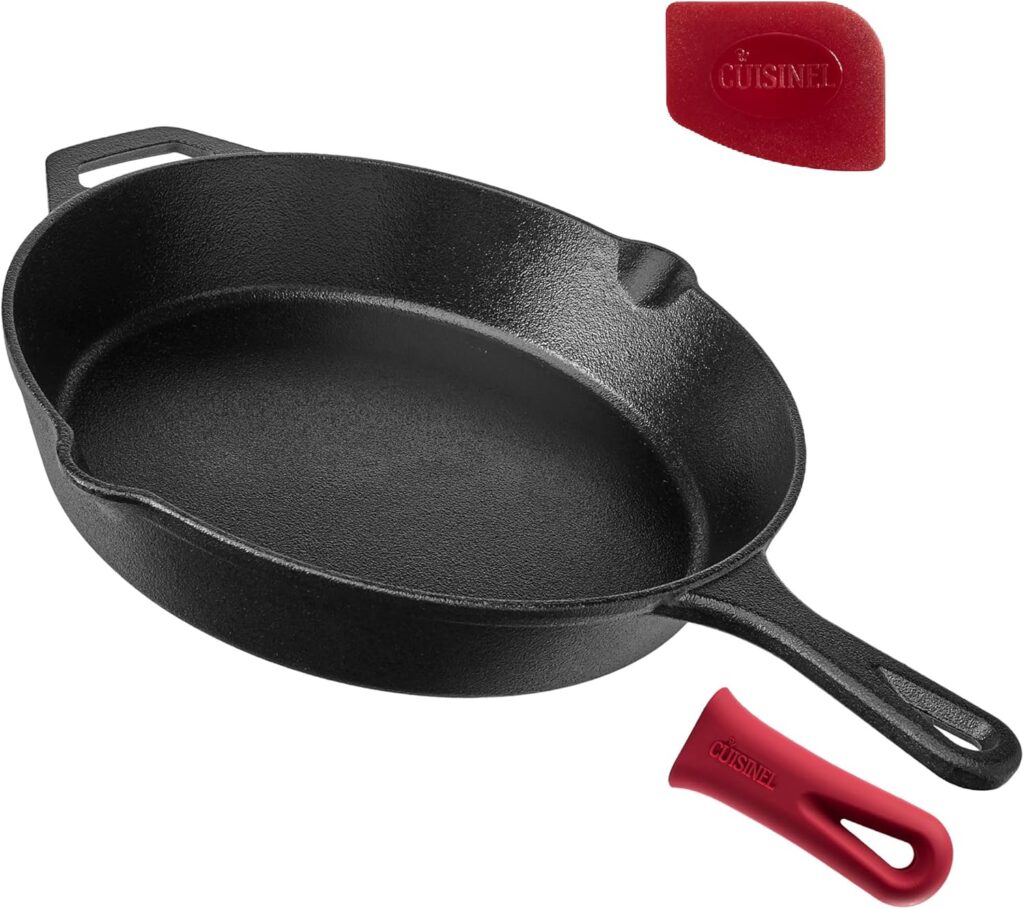
2. Cuisinel 12″ Pre-Seasoned Cast Iron Skillet
Best For: Budget-conscious buyers who want a larger cooking surface, beginners who want extras included
Why We Like It
Cuisinel doesn’t have Lodge’s century-long reputation, but what they offer at this price range is genuinely solid. The 12-inch skillet gives you a much larger cooking surface than the standard 10.25-inch Lodge — useful for cooking multiple chicken pieces at once, doing family-sized frittatas, or making skillet cookie at full size.
What makes the Cuisinel stand out in the budget category is what comes included: a heat-resistant silicone handle sleeve and a care guide. The silicone handle cover is a thoughtful addition because cast iron handles get dangerously hot, and this makes the pan much safer to move around mid-cook. Lodge sells their handle holders separately.
The pre-seasoning is comparable to Lodge out of the box — slightly uneven in some spots, but functional. I noticed the finish is a little smoother than Lodge’s casting, which helped with egg cooking earlier on in the seasoning process.
The one honest critique: Cuisinel is a smaller brand with less quality control consistency reported across online reviews. A small number of buyers have mentioned surface imperfections or thin spots in the pre-seasoning. In my testing, I didn’t encounter this, but it’s worth knowing. Their customer service has been responsive from what I’ve seen, and they stand behind the product.
For the price — often under 40 dollars for the 12-inch with accessories — this is a strong value pick for anyone who wants to cook for more than one or two people without spending Lodge’s premium prices on the larger sizes.
Pros
- Larger 12-inch cooking surface ideal for family cooking
- Comes with a heat-resistant silicone handle sleeve (Lodge charges extra for this)
- Pre-seasoned and ready to use out of the box
- Works on all heat sources including induction
- Oven safe
- PFAS-free and PFOA-free
- Good value for the size and accessories included
- Smooth finish improves non-stick performance earlier than rough-cast alternatives
Cons
- Relatively newer brand with less quality control history than Lodge or Le Creuset
- Some user reports of inconsistency in pre-seasoning across units
- Heavier than the 10-inch Lodge due to larger size
- Not made in the USA
- No lid included
- Less heritage and resale value compared to premium brands
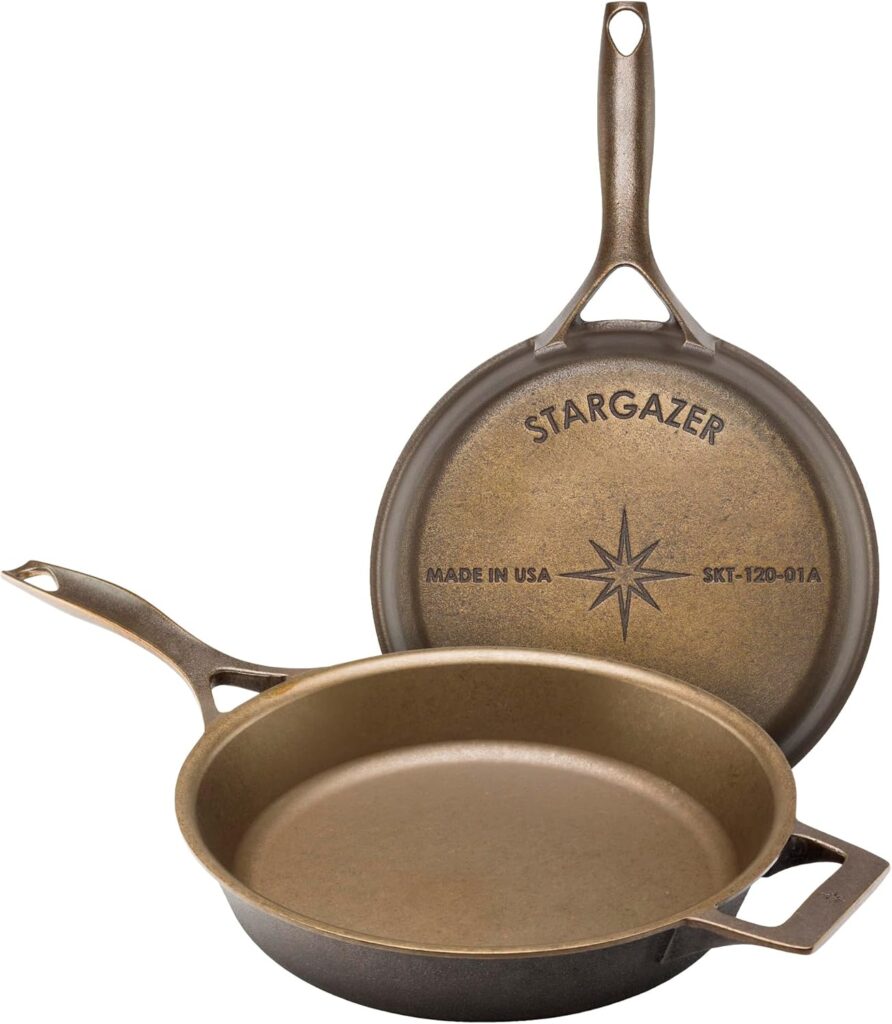
3. Stargazer 12-Inch Cast Iron Skillet
Best For: Serious home cooks who want the best-performing raw cast iron, anyone who wants an heirloom-quality American-made pan
Why We Like It
Stargazer is what happens when someone who actually cooks decides to redesign cast iron from the ground up. Founded in 2015 by Peter Huntley in Allentown, Pennsylvania, Stargazer set out to build a cast iron skillet that fixes the things home cooks actually complain about — food sticking on rough surfaces, too-heavy pans, and poorly designed rims that drip when you pour.
The 12-inch Stargazer weighs 6.5 pounds, which is notably lighter than most 12-inch cast iron pans that hit 8 to 9 pounds. That might sound like a small difference, but when you’re moving a fully loaded pan from stovetop to oven one-handed, those two pounds matter a lot.
The interior surface is CNC machined after casting, giving it a smoother finish than Lodge or Cuisinel right out of the box. I cooked eggs on this pan on my second use — something I wouldn’t attempt with an un-built Lodge — and they released cleanly with just a small amount of butter. The machined surface lets seasoning build faster and more evenly.
The flared rim is a genuinely smart design choice. Rather than the traditional straight edge that causes drips when you pour, Stargazer’s rim curves slightly outward. Cooking gravies and pan sauces? No more liquid running down the side of the pan. The helper handle on the opposite side from the main handle makes it much easier to transfer the pan safely.
At $145, this isn’t a casual purchase. But it comes with a lifetime warranty — no expiration — and it’s made from domestically sourced recycled iron in Pennsylvania. Wirecutter named it a top pick and Bon Appétit called it worthy of heirloom status. I’d agree with both of those assessments.
If you’re buying one cast iron pan to last the rest of your life, this is the one.
Pros
- CNC machined smooth interior surface for better food release from day one
- Significantly lighter than comparable 12-inch cast iron (6.5 lbs vs 8–9 lbs for most competitors)
- Flared drip-free rim — no liquid running down the side when you pour
- Helper handle on opposite side for safe two-handed transport
- Lifetime warranty with no expiration
- Made in the USA from domestically sourced recycled iron
- Hand-seasoned with canola, grapeseed, and sunflower oil blend
- Each skillet has the cast date stamped on the bottom — a nice keepsake touch
- Faster seasoning buildup due to machined surface
Cons
- Premium price point — around $145 puts it out of reach for casual buyers
- Limited product range (only three cookware pieces in the Stargazer lineup)
- Smaller company means potentially longer wait times if warranty service is needed
- No lid available from the brand
- Slightly concave bottom may cause issues on some flat glass cooktops (though designed intentionally to prevent rocking)
4. Lodge L10CF3 5 Qt. Deep Covered Cast Iron Skillet
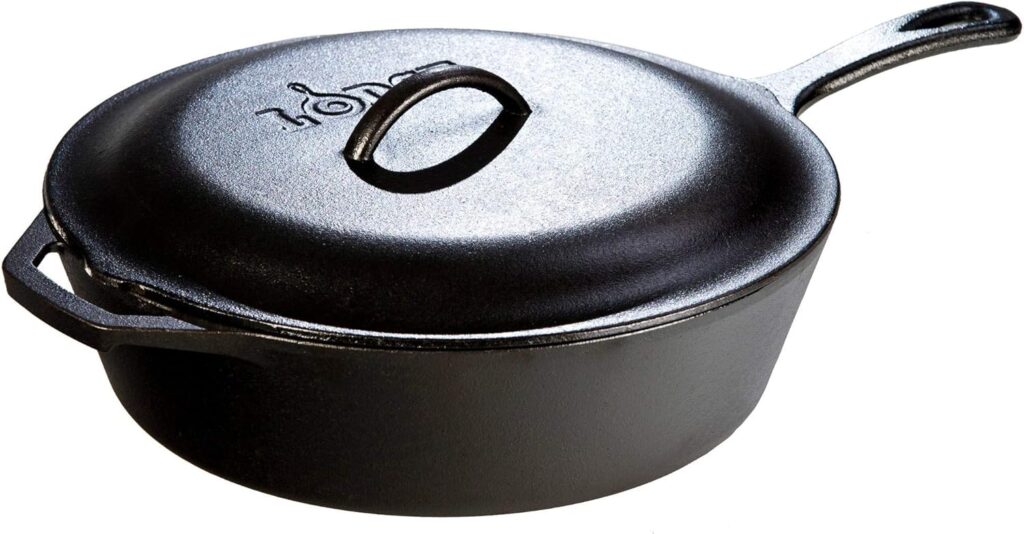
Best For: Home cooks who want one pan to do it all — deep frying, braising, slow cooking, and skillet-to-table serving
Why We Like It
The Lodge L10CF3 is not your average skillet. While a standard skillet has roughly 2 inches of depth, this deep skillet adds a full extra inch — bringing it to just over 3 inches deep — and comes with a matching cast iron lid with self-basting tips on the interior. That lid is the game-changer.
With the lid on, this becomes a shallow Dutch oven. You can braise short ribs, slow-cook a whole cut of pork, make soups, or do no-knead bread. Without the lid, the extra depth means you can deep-fry chicken without the splatter mess that comes with a shallow pan.
I made fried chicken in this pan and the depth kept oil contained perfectly — a huge quality-of-life improvement over trying to deep fry in a standard skillet.
The model number is L10CF3, and the dimensions are 12.9 inches in diameter with a 5-quart capacity. It’s big. The self-basting tips on the underside of the lid collect steam condensation and redirect it back over your food while it cooks — this is the feature that keeps braised meats incredibly moist without you having to manually baste.
It also comes with a helper handle for two-handed lifting, which you’ll genuinely need because this thing is heavy when fully loaded. At full capacity with a lid, you’re looking at around 13 to 14 pounds of pan plus food.
The price is reasonable — usually between $55 and $75 — and it comes pre-seasoned like all Lodge products, made in the USA. This is the pan I reach for on Sunday when I’m making something that needs to cook low and slow for a couple of hours.
Pros
- Extra-deep design (3+ inches) holds more volume and reduces oil splatter during frying
- Comes with a cast iron lid featuring self-basting tips for moisture retention
- 5-quart capacity turns it into a hybrid Dutch oven when covered
- Helper handle for safer two-handed transport
- Pre-seasoned with 100% natural vegetable oil, ready to use
- Made in the USA by Lodge
- Works on all cooktops including induction, plus grill and campfire
- Great for braising, slow cooking, deep frying, and roasting
- More versatile than a standard flat skillet
Cons
- Very heavy when fully loaded — not ideal if strength or wrist mobility is a concern
- The deep sides make it slightly harder to flip foods like pancakes or eggs
- Larger footprint takes up more stovetop space
- Takes longer to heat up due to mass
- Rough cast iron texture requires regular seasoning maintenance
- The cast iron lid adds significant weight — no glass lid option for monitoring food without lifting
5. Le Creuset Signature Enameled Cast Iron Skillet 11.75″ – Marseille
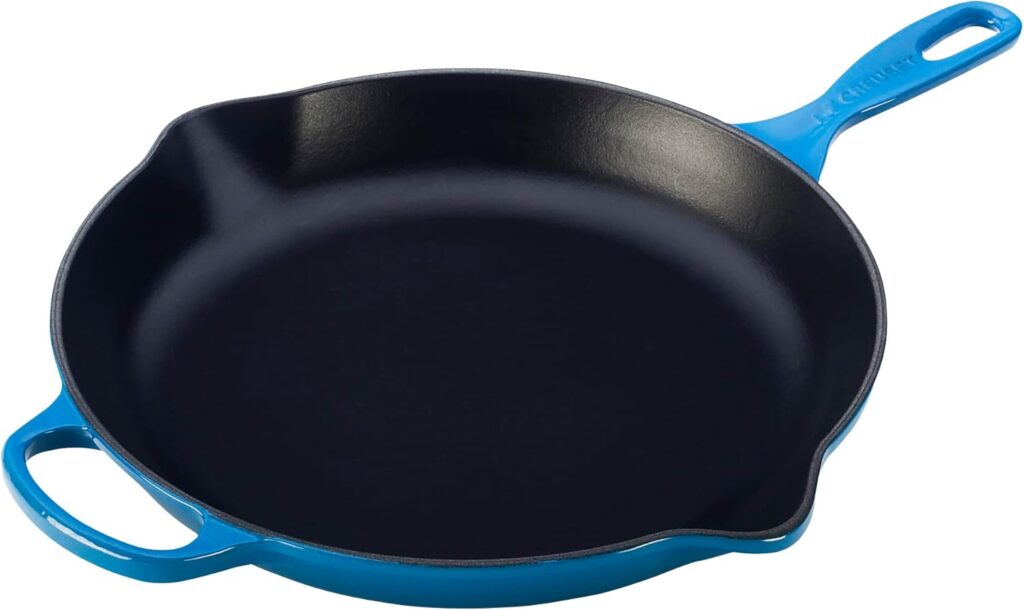
Best For: Anyone who wants premium performance with zero seasoning hassle, gift buyers, serious home chefs, those who want beautiful cookware that goes from stove to table
Why We Like It
Le Creuset has been making enameled cast iron in France since 1925. The Signature Skillet in Marseille blue is one of those kitchen pieces that makes people ask questions when they see it on your counter. But this pan isn’t just about looks.
The interior is coated with a black satin enamel that is specially formulated for high-temperature cooking. Unlike raw cast iron that needs to be seasoned, the enamel coating means you never have to do a single seasoning treatment. You can wash this pan with soap and water.
You can even put it in the dishwasher, though hand washing is still recommended to preserve the enamel finish over time.
The cooking performance is outstanding. Le Creuset’s cast iron is dense and smooth, and the enamel surface provides genuinely excellent heat distribution. I did side-by-side sears on chicken thighs in the Le Creuset and the Stargazer — the crust development was comparable, though the Le Creuset ran slightly hotter at medium heat due to the enamel’s heat properties.
Over time, the enamel develops a natural patina that actually improves its non-stick performance, getting better and better with use.
The 11.75-inch size is a solid large cooking surface. The helper handle on the opposite side makes moving this heavy pan much safer. The long iron handle stays cooler than the body of the pan, though you’ll still want an oven mitt for any oven use.
At roughly $280 to $350, this is the most expensive option on this list by a significant margin. But consider what you’re getting: a pan that requires no seasoning maintenance, is dishwasher-friendly, comes in gorgeous colorways including the iconic Marseille blue, and is built to genuinely last a lifetime. Le Creuset backs it with a lifetime warranty.
If you’re buying a gift for a serious home cook — a wedding gift, housewarming, milestone birthday — this is the one.
Pros
- Enameled interior requires absolutely no seasoning — ever
- Dishwasher safe (hand washing still preferred for longevity)
- No-rust guarantee since the enamel protects the iron from moisture
- Beautiful Marseille blue colorway goes from stovetop directly to the table for serving
- Lifetime warranty from a 100-year-old French brand
- Superior heat distribution and retention
- Black satin enamel formulated for high-temperature performance
- Develops a natural patina over time that improves non-stick performance
- Helper handle for safer handling
- Can be used with any cooktop including induction, plus oven safe up to 500°F
Cons
- Very expensive — roughly 8 to 10 times the cost of a Lodge skillet
- Heavier than Stargazer due to the enamel coating
- Enamel can chip if dropped or subjected to sudden temperature changes (thermal shock)
- Cannot be used safely over an open campfire or extreme direct flame
- Requires more careful handling than raw cast iron
- The Marseille color (and other colorways) can stain slightly from high-heat cooking over time
- Not made in the USA — manufactured in France (a pro for some, a con for others)
Other Things to Consider
Weight and Ergonomics
Cast iron is heavy. Period. The lightest option on this list is the Stargazer at 6.5 pounds for a 12-inch pan. The Lodge L10CF3 with its lid can hit 13-plus pounds loaded. If you have arthritis, wrist problems, or you’re buying for someone with limited strength, size down to a 10-inch or 10.5-inch pan.
Also look for pans with a helper handle on the opposite side — the Lodge covered skillet and the Le Creuset both have this, and it genuinely changes how safely you can move a hot, loaded pan.
Seasoning and Maintenance
Raw cast iron (Lodge, Cuisinel, Stargazer) needs to be hand washed only — no dishwasher — dried immediately, and lightly oiled after each use. Every few months you’ll want to do a full re-seasoning in the oven. This is not hard, but it is a commitment. If you don’t want to deal with any of that, the Le Creuset enameled option is your friend.
It’s more expensive upfront, but the maintenance savings over years of ownership are real.
Surface Finish and Food Release
Budget raw cast iron like Lodge and Cuisinel has a rougher, pebbled surface from the casting process. Food sticks more initially, and you need to build seasoning over weeks of cooking before the non-stick performance is really good. Machined cast iron like Stargazer starts smoother and gets there faster. Enameled cast iron like Le Creuset has a consistent non-stick-adjacent surface from day one.
Induction Compatibility
All five products on this list work on induction cooktops. Cast iron is naturally magnetic, so induction compatibility is universal across the category. No issues here.
Heat Source Versatility
Raw cast iron is the most versatile: gas, electric, induction, ceramic, grill, campfire, oven — all work. Enameled cast iron should not be used over an open flame or campfire, and rapid temperature changes can stress the enamel coating. If you camp or grill over charcoal regularly, stick with raw cast iron.
Price vs. Longevity
Here’s the honest math: a $25 Lodge will last decades if you take care of it. A $145 Stargazer and a $300 Le Creuset will last lifetimes. The premium options are not about performance differences that show up in everyday scrambled eggs — they’re about craftsmanship, surface finish, manufacturing origin, and the fact that you’re buying something you’ll never have to replace.
Buy within your budget and don’t feel like you’re missing out.
Accessories Worth Having
Regardless of which pan you buy, a few accessories make cast iron cooking significantly more enjoyable. A silicone handle cover (Cuisinel includes one, Lodge sells theirs separately) prevents burns during stovetop cooking. A chain mail scrubber or a Lodge cast iron cleaning brush makes cleaning much easier than trying to scrub with a regular sponge.
A can of flaxseed or grape seed oil spray makes re-seasoning quick and easy.
Frequently Asked Questions
Q: Do I need to season a cast iron skillet before I use it for the first time?
All five skillets in this review come pre-seasoned from the factory, so technically no — you can cook in them right out of the box. However, factory seasoning is a starting point, not a complete seasoning. For raw cast iron (Lodge, Cuisinel, Stargazer), your first few cooks should be with fats — bacon, butter, oil-heavy dishes — to help build the seasoning layers naturally.
Avoid cooking acidic foods like tomato sauce or citrus dishes for the first several weeks, as acid breaks down new seasoning before it’s had time to properly cure. After about a month of regular cooking and proper care, your raw cast iron will develop significantly better non-stick performance. The Le Creuset enameled skillet requires no seasoning at all, now or ever.
Q: Can I use soap to clean a cast iron skillet?
This is one of the most debated topics in cast iron cooking, and the short answer is: yes, a small amount of mild dish soap is fine, but you don’t really need it. The old advice to never use soap came from the era of lye-based soaps that were genuinely harsh enough to strip seasoning.
Modern dish soap is much milder and won’t damage a well-seasoned pan used occasionally. That said, for regular cleaning, warm water and a stiff brush or a chain mail scrubber are all you need.
The most important thing is to dry your pan immediately and completely after washing — cast iron rusts fast when left wet — and then apply a very thin layer of oil while the pan is still warm. The Le Creuset enameled skillet can be cleaned with soap every time without any concern.
Q: Why is my food sticking to my cast iron skillet?
There are a few common reasons. First, you may not have preheated the pan long enough. Cast iron needs 3 to 5 minutes on medium heat before you add food. Second, the pan may not have enough seasoning built up yet — this takes consistent use over weeks. Third, you may have added food before the oil was properly heated.
The water droplet test is your friend: flick a small drop of water into the hot pan — if it beads and dances across the surface, the pan is properly preheated. Fourth, for particularly sticky foods like eggs, a little extra butter or oil at the start goes a long way.
Finally, avoid cooking eggs in a brand-new, poorly seasoned pan — let the seasoning build up on more forgiving foods (sauteed vegetables, bacon, searing meats) before tackling eggs.
Q: Is cast iron safe to use? Does it leach iron into food?
Cast iron is completely safe to cook with and is actually one of the oldest, most trusted cookware materials in the world. It is PFAS-free and PFOA-free — none of the chemical coatings associated with concerns around non-stick pans. It does leach trace amounts of iron into food when cooking acidic dishes, but this is generally considered harmless or even beneficial for people with iron deficiencies.
If you are concerned about iron intake for medical reasons, consult your doctor. For enameled cast iron like the Le Creuset, the enamel coating creates a barrier that prevents any iron leaching entirely.
Q: How do I restore a rusty cast iron skillet?
Rust happens when cast iron is left wet or improperly stored. The good news is that rust does not ruin cast iron — it can almost always be fully restored. Start by scrubbing the rust off with steel wool or a chain mail scrubber and warm water. Don’t be gentle — scrub aggressively until the rust is gone.
Rinse and dry the pan completely, then place it on the stovetop over medium heat for a few minutes to drive out any remaining moisture. Once dry, apply a thin, even coat of flaxseed oil, vegetable oil, or Crisco to the entire pan — inside, outside, and handle.
Wipe off the excess so only a very thin layer remains (this is important — too much oil creates a sticky, gummy surface). Place the pan upside down in an oven preheated to 450 to 500 degrees Fahrenheit for one hour, then let it cool completely in the oven. Repeat this process two to three times and your pan will be back to cooking condition.
This restoration process works for Lodge, Cuisinel, Stargazer, and any other raw cast iron. It does not apply to Le Creuset enameled cast iron, which should not be treated this way — if the enamel chips or cracks significantly, contact Le Creuset directly.
Conclusion: Which Cast Iron Skillet Should You Buy?
After months of cooking with all five of these pans, here’s where I landed.
If you’re a first-time cast iron buyer or you’re shopping on a budget, the Lodge 10.25″ Pre-Seasoned Cast Iron Skillet (L8SK3) is the answer. Under $30, made in the USA, and backed by 125 years of proven reliability — it’s one of the best values in all of cookware, period.
You’ll have to build seasoning over time and deal with a rougher surface initially, but thousands of home cooks have done exactly that and ended up with pans they’ve passed down for generations. Start here.
If you want a larger cooking surface without spending a lot, the Cuisinel 12″ Pre-Seasoned Cast Iron Skillet gives you more room to cook, comes with a silicone handle cover already included, and is priced competitively. It’s a solid step up in size from the Lodge 10.25 without a significant jump in cost.
If you cook regularly and you want the best-performing raw cast iron skillet available — one that’s lighter, smoother, better designed, and genuinely made to last the rest of your life — the Stargazer 12-Inch Cast Iron Skillet is worth every dollar of its $145 price tag.
The machined surface, the drip-free rim, the lighter weight, and the lifetime warranty make it the best all-around cast iron skillet I’ve ever used. This is the one I’ll be cooking with for the next 30 years.
If you’re a one-pan-to-rule-them-all type of cook who wants something that can deep fry, braise, slow cook, and serve, the Lodge L10CF3 5 Qt. Deep Covered Cast Iron Skillet is uniquely versatile. The included lid transforms it into a braiser and Dutch oven hybrid, and the extra depth makes oil frying far more manageable and less messy than a standard skillet.
At $55 to $75, it’s a strong value for the functionality you get.
And if money isn’t the primary concern — or you’re buying a gift for someone special — the Le Creuset Signature Enameled Cast Iron Skillet in Marseille is the Rolls-Royce of this category. Zero seasoning maintenance, stunning color, lifetime warranty, and genuine heirloom cooking performance. It’s expensive, yes. But it’s also one of those purchases you make once in your life and never regret.
Whatever you choose, you’re buying into a cookware tradition that’s older than most modern kitchen technology. Take care of your cast iron and it will take care of you — and probably your kids too.



Leave a Reply