

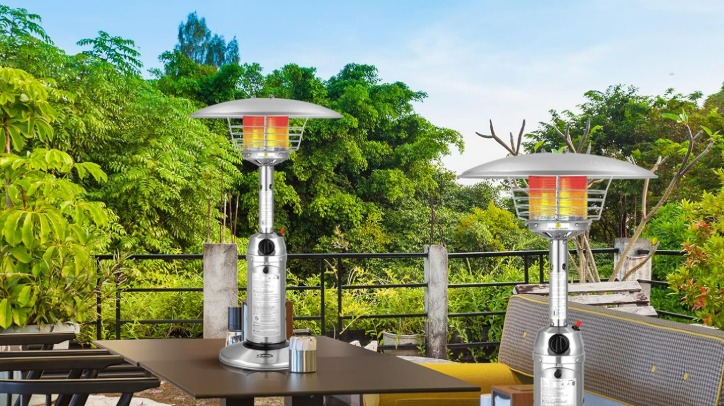
The Best Patio Heater: 5 Picks I Actually Tested is worth a close look — i’ll be real with you — I didn’t set out to become a patio heater expert. It started with one embarrassingly cold backyard dinner party where everyone left by 8 PM because my outdoor space felt like a walk-in freezer. I figured there had to be a better way to keep people outside and actually enjoying themselves past sundown in the fall.
So I did what any slightly obsessive person would do — I ordered five different patio heaters, cleared out the patio, and spent several weekends testing them back to back. I live in a mid-Atlantic climate where fall and early winter evenings can drop into the 40s pretty fast, so I had plenty of real-world conditions to work with.
I tested each unit on overall heat output, ease of assembly, lighting reliability, stability, mobility, and how well they handled wind. I also paid attention to build quality, because a heater that rusts out after one season is just money wasted.
What you’re getting here is not a rehash of spec sheets. This is the full rundown on what each heater actually does when you fire it up in your backyard, what annoyed me, what impressed me, and who each one is right for.
Questions to Ask Yourself Before Buying a Patio Heater
Before you pick one, get honest about your situation. These questions will save you from returning something that just doesn’t fit your setup:
How large is your outdoor space? A tabletop heater isn’t going to warm a 20-person party on a restaurant-style deck. And a massive 50,000 BTU tower is overkill for a two-person balcony.
Do you move around a lot or keep things in one spot? Some heaters have wheels and are easy to reposition. Others are better off staying in one place.
Is your patio covered or open? Covered patios trap heat a lot better, meaning you can get away with less BTU. Open-air spaces need more punch.
How often will you entertain? If it’s just you and a couple of friends a few times a year, a budget-friendly tabletop might be plenty. If you’re hosting weekly, invest in something durable.
Where are you storing it in the off-season? Tower heaters are tall. Tabletop heaters are compact. Know your storage situation before you commit.
What’s your propane situation? Nearly every heater here runs on propane. Most require a standard 20 lb tank (not included). Tabletop models use smaller 1 lb canisters. Running a larger tank with an adapter hose on a tabletop unit extends your run time significantly.
Types of Patio Heaters
| Type | Best For | Heat Output | Fuel | Portability |
|---|---|---|---|---|
| Freestanding Tower (Mushroom-top) | Large patios, parties, restaurants | 40,000–50,000 BTU | Propane (20 lb tank) | Moderate — wheels help |
| Pyramid / Glass Tube Flame | Ambiance + heat, mid-size spaces | 40,000–48,000 BTU | Propane (20 lb tank) | Moderate — wheels help |
| Tabletop Propane | Small patios, camping, close-range warmth | 9,500–13,000 BTU | Propane (1 lb canister) | High — carry anywhere |
| Wall-Mounted Electric | Covered patios, permanent setups | 1,500–4,000W | Electric | None — fixed |
| Infrared Electric | Spot heating, covered outdoor areas | 1,500–3,000W | Electric | Low to moderate |
Our Top Picks by Category
| Category | Product | BTU Output | Fuel | Approx. Price |
|---|---|---|---|---|
| Best Budget Tower | Amazon Basics 46,000 BTU Patio Heater | 46,000 BTU | Propane | ~$175 |
| Best Premium Tower with Table | AZ Patio Heaters HLDS01-WCGT 48,000 BTU | 48,000 BTU | Propane | ~$250+ |
| Best Tabletop (Budget-Friendly) | Giantex 11,000 BTU Tabletop Heater | 11,000 BTU | Propane | ~$60–$80 |
| Best Tabletop (Premium Brand) | Cuisinart COH-514 Tabletop Patio Heater | 11,000 BTU | Propane | ~$150 |
| Best High-Performance Tower | EAST OAK 50,000 BTU Double-Layer SS Heater | 50,000 BTU | Propane | ~$180–$220 |
Detailed Hands-On Reviews
1. Amazon Basics 46,000 BTU Portable Outdoor Propane Patio Heater
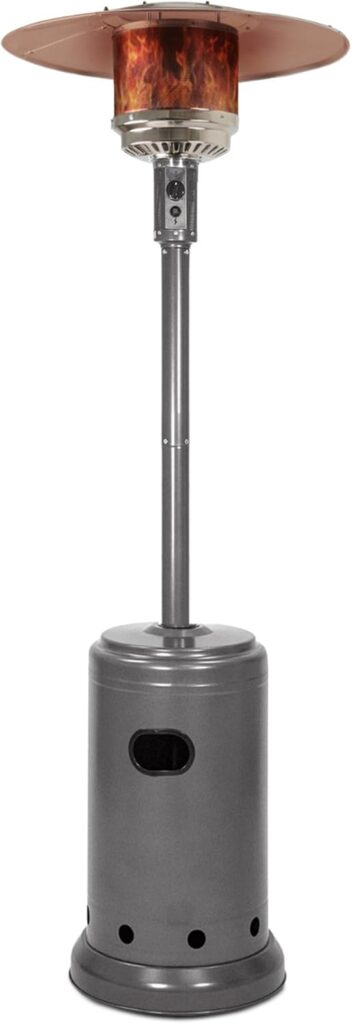
Best for: Budget-conscious buyers who want serious heat output without overspending
Why We Like It
This is the heater I recommend when someone asks, “What’s the best value patio heater?” It delivers 46,000 BTUs, heats up to an 18-foot diameter, and comes in at roughly $175 — which is dramatically cheaper than comparable tower heaters from premium brands. It looks like a standard mushroom-top tower, stands about 91 inches tall, and has a slate gray powder-coated finish that hides smudges well and resists rust.
Assembly took me about 35 to 45 minutes solo. There are no assembly instructions included in the box, which is genuinely frustrating, but a quick search on YouTube gets you sorted in minutes. Once it’s up, the Piezo ignition fires up reliably with a single push of the button. The adjustable heat knob goes from low to high smoothly.
The base has a water reservoir that you can fill to add weight and stability — a smart feature that matters if you live somewhere windy. The included wheel kit makes it easy enough to roll from one side of the patio to the other, though it does take a bit of effort on uneven surfaces since it’s not a four-wheel design.
The heat radius is impressive for the price. On a calm 45-degree evening, I was comfortable in a t-shirt sitting about six feet away on medium setting. The tilt safety auto-shutoff is a reassuring feature that cuts gas if the heater tips over. It also includes a chain to secure the propane tank inside the base.
Fair warning: like most outdoor appliances, this one needs a little maintenance love. If you leave it exposed to rain without a cover, the gas valve and controls can seize up over time. Buying a compatible cover for around $30 is worth every cent.
Pros
- Outstanding value for 46,000 BTU output
- Comes in multiple color finishes to match your patio furniture
- Piezo push-button ignition works reliably
- Water-fillable base adds stability against wind
- Built-in wheels make repositioning manageable
- Tilt safety shutoff for peace of mind
Cons
- Zero assembly instructions included in the box
- Can rust or seize internally if left uncovered over time
- Wheels are two-wheel design, so maneuvering on rough surfaces takes effort
- Propane tank (20 lb) not included
2. AZ Patio Heaters HLDS01-WCGT Propane Patio Heater
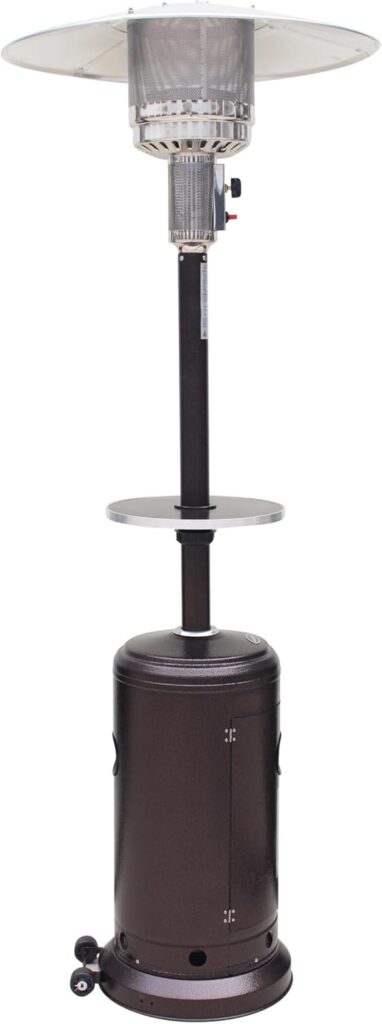
Best for: Homeowners who want a stylish, feature-rich tower heater with an integrated table and heavy-duty heat output
Why We Like It
The AZ Patio Heaters HLDS01-WCGT (also branded as Hiland) is the heater you get when you want something that feels premium, looks sharp on the patio, and actually does more than just blast heat. The hammered bronze finish is genuinely attractive — it blends effortlessly with outdoor furniture and doesn’t show fingerprints or watermarks the way shinier metals do.
What sets this one apart is the open-door design at the base. On most tower heaters, swapping out an empty propane tank means lifting or tilting the entire housing. Here, you open a small door, slide the old tank out, and slide the new one in.
After doing this a dozen times on other heaters, I can tell you — that feature alone is worth a significant premium for anyone who hosts regularly.
The adjustable-height table at mid-body level is something I initially dismissed as a gimmick. I was wrong. It ended up holding drinks, phones, and snack dishes throughout every evening I used it, and guests naturally gathered around it like it was a cocktail table. The diameter is 15.7 inches — not massive, but very usable.
Heat output is 48,000 BTU, which is strong. On a chilly mid-autumn evening, I was comfortable in a light jacket with the heater set to medium, sitting about eight feet away. The double safety features — a built-in tilt switch and an integral thermocouple that prevents gas leakage if the flame goes out — give it a solid safety profile.
Assembly runs 45 to 60 minutes for most people. The single-pole design (compared to the two-piece poles on many budget heaters) makes it noticeably more stable and rigid once assembled. Some buyers have reported receiving dented or bent parts, which speaks to occasional QC inconsistency in shipping — worth inspecting the box for damage on delivery.
Pros
- Open-door tank access makes propane changes quick and easy
- Hammered bronze finish looks upscale and holds up well outdoors
- Adjustable-height table is surprisingly functional in real use
- 48,000 BTU puts out serious, room-filling warmth
- Single-pole design is more rigid than two-piece alternatives
- CSA approved for safety compliance
- Double safety features: tilt shutoff and thermocouple
Cons
- Bulky and heavy — not something you move often once set up
- Assembly is time-consuming; plan for at least an hour
- Occasional reports of bent or dented parts on delivery
- On the pricier side compared to basic tower heaters
- Some users noted the top surface can get very hot — avoid placing items on it
3. Cuisinart COH-514 Portable Tabletop Patio Heater (Dark Gray)
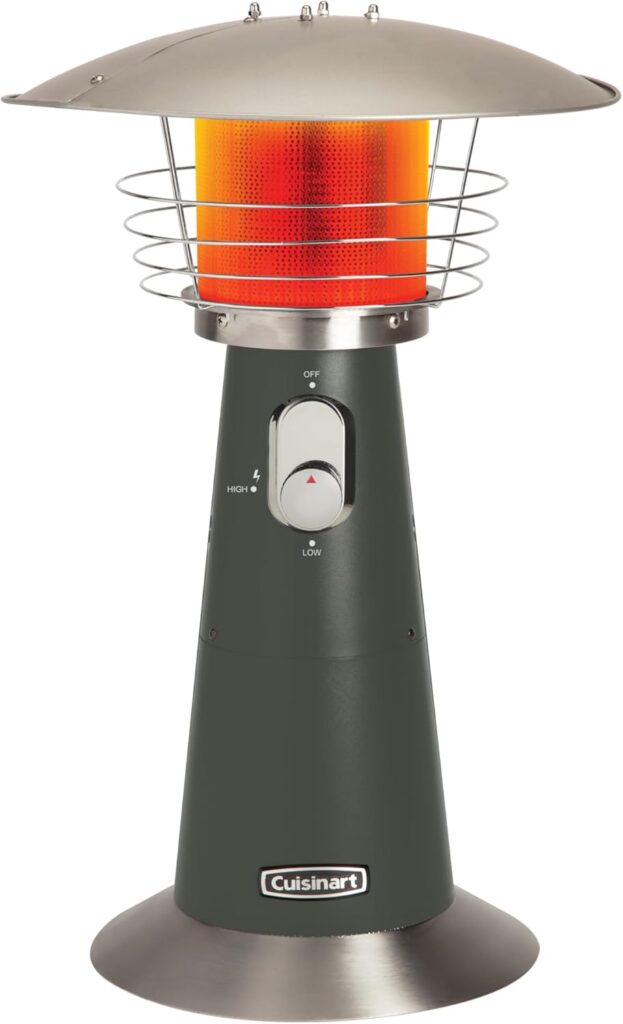
Best for: Couples and small groups who want a stylish, compact heater for close-range warmth at a patio table or while camping
Why We Like It
The Cuisinart COH-514 is what you get when you want a tabletop heater that actually looks like it belongs on a nice patio rather than a jobsite. The dark gray finish is clean and modern. The build quality feels noticeably better than most budget tabletop heaters in this price range, and it comes from a brand most people already trust in their kitchens.
At 11,000 BTU, this heater covers about 30 square feet, which is exactly the right size for a patio dining table of four to six people. It works on standard 1 lb propane canisters, which last around two hours at medium settings.
The real upgrade move — and the one I’d recommend to anyone buying this — is picking up a compatible adapter hose so you can run it off a 20 lb tank. People who do this consistently report that it transforms the heater from “a nice accessory” into a reliable, full-evening heat source.
Lighting it takes a little patience initially. You need to hold the knob in for about 15 seconds to purge air before clicking the igniter. Once you know the drill, it becomes second nature. The rotary dial heat control is smooth and responsive. The anti-tilt safety shutoff and burner screen guard are standard but work well.
I tested it on a calm 48-degree night and found it genuinely warm at arm’s length. It’s not heating a crowd — it’s heating the people right at the table, which is exactly what it’s designed for. Wind is the enemy of this heater, so if your patio is exposed, have a windbreak or stick to calmer evenings.
One thing to know before you light it for the first time: there’s a blue protective film on the reflector plate at the top. Remove it completely before lighting, or it’ll burn and smoke. A few reviewers learned this the hard way.
Pros
- Polished, attractive design that fits well on any patio table
- Compact and lightweight — easy to carry to camping trips or tailgates
- 11,000 BTU is effective for close-range, small-group warmth
- Anti-tilt safety shutoff and burner screen guard built in
- Compatible with 20 lb tank via optional adapter (huge run-time upgrade)
- Clean rotary dial control is easy to use
Cons
- 1 lb canisters last only about two hours — frequent swaps without an adapter
- Not built for wide-area heating; people on the edges of a large table won’t feel much
- Wind significantly reduces effectiveness
- Lighting can require patience: hold the knob in longer than expected
- The adapter hose for a larger tank is an extra purchase (not included)
- Remove the blue protective film before first use — not prominently noted in instructions
4. EAST OAK 50,000 BTU Patio Heater with Double-Layer Stainless Steel Burner
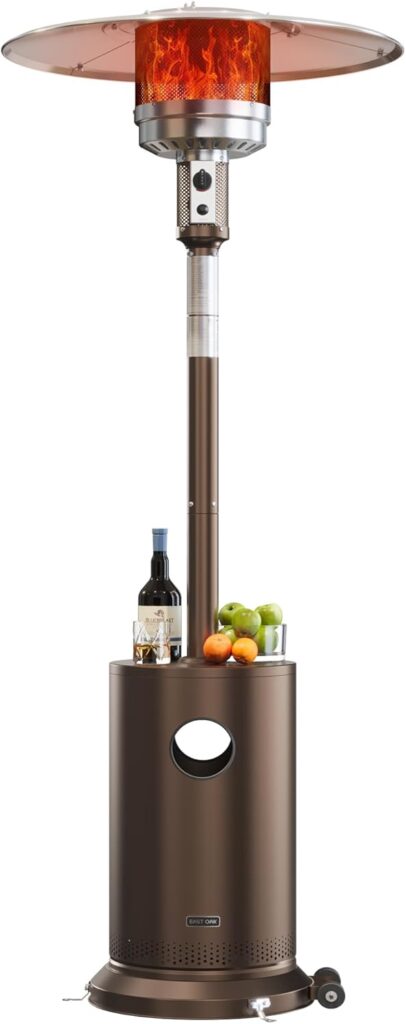
Best for: Homeowners who want the highest heat output in a freestanding tower with commercial-grade build quality and smart design details
Why We Like It
This is the heater I’d buy if I were starting fresh and had a larger budget. The EAST OAK 50,000 BTU stands out from the crowd in a few meaningful ways that go beyond raw BTU numbers.
The double-layer 304 stainless steel heating mesh is genuinely different from what you get on single-layer burner heaters. It’s more structurally rigid, it handles high temperatures better over time, and it feels like it was built to last five or six seasons rather than one or two. Stainless steel also resists corrosion significantly better than powder-coated alternatives when exposed to rain and humidity over multiple seasons.
The round table design at the base is a practical touch. The propane tank hides under the cover, giving the unit a cleaner look. And the surface functions as a usable side table for drinks or a phone — similar to the AZ Patio Heaters above, but at a lower price point.
At 50,000 BTU heating up to an 18 to 20-foot diameter, this unit handles large patios and modest commercial spaces without breaking a sweat.
The triple-safety protection system is thorough: tilt auto-shutoff, three ground-anchoring arms you can stake into soft ground for windy nights, and a thermocouple that kills gas flow if the flame goes out. The Piezo ignition is one-touch and lights on the first press almost every time in my experience.
Assembly is manageable in 30 to 45 minutes. The instructions specifically note that the controls should face away from the wheels — worth following to avoid awkward positioning once it’s together. Requires 4 feet of clearance on all sides and above for safe use, so plan your placement before assembling.
Pros
- 50,000 BTU is among the highest residential outputs available
- Double-layer 304 stainless steel burner is more durable than single-layer designs
- Round table top neatly hides the propane tank and doubles as a side table
- Triple-safety system including ground stakes for windy conditions
- More rust and corrosion-resistant than powder-coated alternatives
- Clean, contemporary look works well in both home and commercial settings
- Wheels make it easy to move
Cons
- Requires 4 feet of clearance on all sides — not suitable for small or tightly furnished patios
- Stainless steel shows smudges and watermarks more than powder-coated finishes
- 20 lb propane tank not included
- Slightly larger footprint than some competitors at the base
5. Giantex 11,000 BTU Portable Tabletop Propane Patio Heater
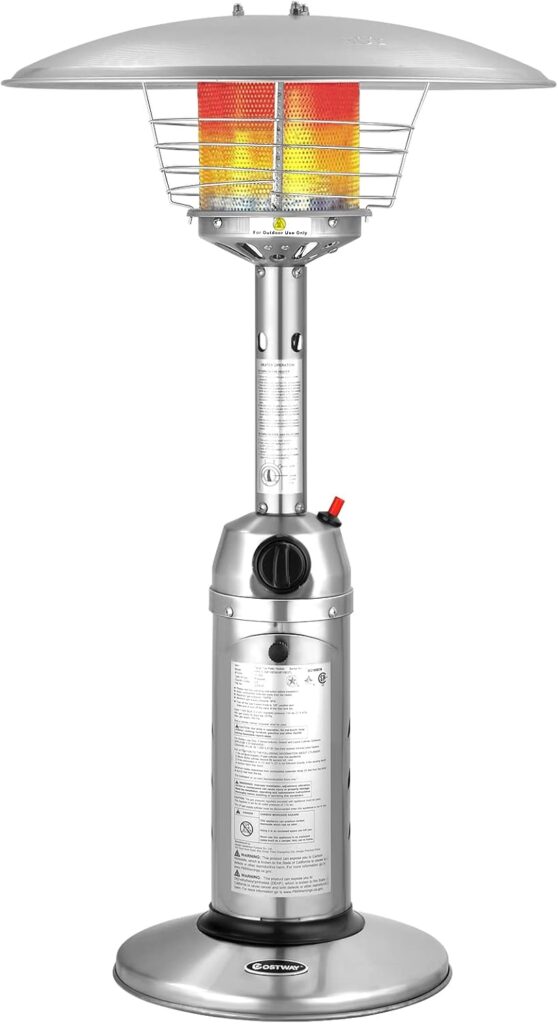
Best for: Budget shoppers who want a reliable, no-frills tabletop heater for occasional use on a small patio, balcony, or at outdoor events
Why We Like It
The Giantex tabletop heater is the “just get it done” pick. It costs a fraction of the Cuisinart, takes up barely any space, and delivers 11,000 BTU with a 4.5-foot heat radius that keeps the people right around the table warm and comfortable. If you’re hosting a couple of friends on a small balcony or need something portable for tailgating, this is a sensible, honest choice.
The stainless steel body feels solid enough for a heater in this price range. The aluminum reflector above the burner is rust-resistant and focuses the heat downward efficiently. There’s also a ring weight in the base for added stability — a small but practical detail that you don’t always see on budget tabletop heaters.
Assembly is quick. The igniter button and heat control knob are straightforward, and the included instructions are actually clear — which, coming from budget brands, isn’t always a given. Safety features include tip-over protection and flameout protection, both of which are standard and work as described.
The heater runs on a standard 1 lb propane canister. Run time at medium heat is around two hours, similar to the Cuisinart. It’s compatible with a larger tank via adapter hose (sold separately), which significantly extends the usable life per session.
This heater produces no noticeable odors or fumes during normal operation, which I appreciated since a couple of cheaper alternatives I’ve tested in the past had a faint chemical smell for the first few uses. It’s not the most visually striking heater on this list, but it’s clean and inoffensive, and that stainless silver finish looks fine on any patio table.
Pros
- Very affordable — one of the most budget-friendly tabletop options available
- Straightforward assembly with clear instructions
- Stainless steel and aluminum build is solid for the price
- Ring weight in the base adds stability
- No noticeable odors or fumes during use
- Tip-over and flameout protection included
- Compact and easy to carry anywhere
Cons
- 4.5-foot heat radius is limited — only effective for people sitting close
- 1 lb propane canisters burn through quickly; adapter hose needed for longer sessions
- Not as polished or premium-looking as the Cuisinart tabletop
- Wind will noticeably reduce heat effectiveness outdoors
- Less brand recognition means customer support can be inconsistent
Other Things to Consider Before You Buy
Propane Tank Costs and Run Time
All five heaters reviewed here run on propane. Tower heaters use a 20 lb tank (not included) that costs roughly $15 to $25 to fill and lasts approximately 8 to 12 hours at medium to high settings. Tabletop heaters use 1 lb canisters that last about two hours and cost $3 to $6 each — which adds up fast.
If you’re running a tabletop heater more than occasionally, buy a quality adapter hose to connect it to a 20 lb tank instead.
BTU Output and Space Size
As a general rule: 40,000 to 50,000 BTU heats a roughly 18 to 20-foot diameter area outdoors. This is appropriate for a patio seating area of eight to twelve people. Tabletop heaters at 11,000 BTU are effective within about four to five feet and best for groups of two to four seated close together. On very cold nights or in wind, both numbers shrink meaningfully.
Wind and Weather
No outdoor propane heater performs well in heavy wind. If your patio is exposed, look for a heater with stabilizing features — ground stakes (EAST OAK), fillable water base (Amazon Basics), or a weighted base (Giantex tabletop). For consistently windy spaces, consider a wall-mounted electric infrared heater instead.
Covers and Storage
Tower heaters left outdoors without covers rust and seize up. This is not a maybe — it’s when. Budget $25 to $40 for a properly sized cover for any of the tall heaters. It will extend the life of the unit by years. Tabletop heaters are small enough to bring inside, which is even better.
Safety Clearances
The EAST OAK explicitly requires 4 feet of clearance on all sides and above. Most tall heaters need at least 2 to 3 feet. Never position a patio heater under a low awning, near draped fabric, or anywhere kids or pets could contact it or tip it over.
Assembly Difficulty
Budget for time on tall heaters — 30 to 60 minutes is typical for tower units, more if you’re solo. The Amazon Basics comes with no assembly instructions (seriously, look up a video first). The AZ Patio Heaters model is time-consuming but well-constructed once together. Tabletop heaters are quick — most take under 15 minutes.
Weight and Portability
Tower heaters weigh 40 to 65 pounds. Most include wheels, which helps significantly. Tabletop heaters in this roundup weigh 11 to 15 pounds and are genuinely carry-anywhere portable. If you need to move your heater frequently across different event setups or bring it out of storage often, a tabletop is the practical choice.
Noise
All propane heaters make a low, constant hiss that you’ll notice in quiet moments but tune out quickly in conversation. None of the five heaters tested here were loud enough to interfere with conversation at any setting. The AZ Patio Heaters model is particularly quiet even on high.
If that matters to you, our piece on knife sharpener tested amp goes further.
Frequently Asked Questions
How do I know what BTU output I actually need for my patio?
The simplest way to think about it: for every 10 square feet of outdoor space you want to keep warm, plan for roughly 1,000 BTU of output as a starting baseline. Keep in mind that outdoors is not like heating a room — heat escapes in every direction, wind carries it away, and ambient temperature matters.
A 46,000 or 50,000 BTU tower heater is genuinely effective at keeping eight to twelve people comfortable in a roughly 18 to 20-foot area on a cool fall evening in the 40s to 50s Fahrenheit. Below that or on windy nights, everyone needs to sit closer to the heater or you need multiple units.
Tabletop heaters with 11,000 BTU are realistically effective within four to five feet of the unit. If you’re heating a large open deck for a big gathering, a single tower heater is your starting point but may not be enough on its own for colder temperatures.
Is it safe to use a propane patio heater on a covered patio or under a pergola?
The honest answer is: it depends on the coverage and ventilation. Propane heaters require adequate airflow to combust cleanly and prevent carbon monoxide buildup. A fully enclosed space is never safe for a propane heater — that’s non-negotiable. However, a well-ventilated covered patio, open pergola, or porch with three open sides is generally considered safe for most freestanding propane patio heaters.
You should always maintain the clearance distances specified in your heater’s manual (typically 2 to 4 feet from any combustible surface above and to the sides). When in doubt, err toward an electric infrared heater for enclosed or low-ceiling covered spaces — they don’t produce combustion gases at all.
Why does my propane patio heater keep going out or failing to stay lit?
This is one of the most common frustrations people run into. There are a few typical culprits. First, the thermocouple — the safety device that keeps the gas valve open when a flame is present — may not be getting enough heat from the pilot flame, which causes it to shut off gas flow.
The fix is usually to hold the ignition button down for longer (10 to 20 seconds after the pilot lights) to heat the thermocouple sufficiently. Second, air in the gas line from a fresh propane tank swap can cause repeated going-out. Purging the line by holding the pilot position for 30 to 60 seconds before attempting full ignition usually resolves this.
Third, wind can extinguish the pilot flame before the thermocouple gets hot — always try to light the heater in a sheltered position. If none of these fix it, the thermocouple itself may need replacing, which is a standard inexpensive part available at most hardware stores.
Can I leave my patio heater outside year-round?
Technically you can, but practically you’ll regret it. Rain, humidity, and temperature swings are hard on the gas valve, igniter components, and any non-stainless metal parts. The most common failure mode for patio heaters that are left outside without protection is a seized or corroded gas valve — a completely preventable problem. At minimum, buy a weather-resistant cover that fits your specific heater model.
Ideally, store tower heaters in a garage or shed during the off-season. The EAST OAK’s 304 stainless steel construction holds up better than powder-coated alternatives when exposed, but even stainless benefits from a cover. For tabletop heaters, just bring them inside — they’re small enough that there’s no excuse not to.
What’s the difference between a propane patio heater and an electric infrared heater, and which is better?
They heat differently and suit different situations. A propane heater combusts propane gas to produce radiant and convective heat — the flame heats the burner, which warms the air and radiates heat outward in 360 degrees. This is effective for large, open outdoor spaces and requires no electrical outlet, making it fully portable anywhere you have propane.
The tradeoff is ongoing propane costs and the need for ventilation. An electric infrared heater converts electricity to infrared radiation, which heats objects and people directly (like how sunlight warms you) rather than warming air first. This makes infrared heaters more wind-resistant and effective in partially enclosed spaces, and they work instantly at full output with no warm-up period.
The tradeoffs are a power outlet requirement, limited range, and the need for a wall mount or stand. For a large open backyard or deck where you move around, propane wins. For a covered patio, pergola, or tight outdoor seating area near a power source, electric infrared is a strong contender.
Conclusion
After testing all five of these heaters across multiple evenings and weather conditions, here’s the honest bottom line on who should get what.
If you’re on a tight budget but still want serious heat for a full-size patio, the Amazon Basics 46,000 BTU Patio Heater is the most no-brainer purchase in this list. It doesn’t look fancy, the assembly manual situation is a mild disaster, but the heat output is legitimate and the price is hard to argue with.
Buy a cover, don’t leave it soaking in rain, and this thing will serve you season after season.
For anyone who wants to step up in both style and functionality, the AZ Patio Heaters HLDS01-WCGT is the heater that impresses guests. The hammered bronze finish, the open-door tank access, and that built-in adjustable table make it feel premium in ways that matter in real daily use. If you host often and want something that looks intentional on your patio, this is it.
If maximum heat output and long-term durability are your priorities, the EAST OAK 50,000 BTU Double-Layer Stainless Steel Heater is the performance pick. The double-layer 304 stainless steel burner is genuinely better-engineered than what you find on most competitors, and the 50,000 BTU output is the highest in this roundup. The round table top and concealed tank make it look clean and considered, not utilitarian.
This one earns its price.
For tabletop heating, the choice really comes down to budget versus brand preference. The Cuisinart COH-514 costs more but delivers a better-looking, better-built unit that fits naturally on a nice patio setup — and the Cuisinart brand backing matters if you ever need support.
The Giantex 11,000 BTU Tabletop Heater does the same heating job at less than half the cost and is perfectly fine for occasional use, casual entertaining, and anyone who just needs something functional without fuss.
Whatever you pick, remember to grab a cover, budget for a 20 lb propane tank, and if you’re running a tabletop heater for extended sessions, invest in a good adapter hose. Those small extras are what turn a good heater into a great outdoor experience.



Leave a Reply