

A dull kitchen knife can increase food prep time by 30% or more, causing frustration during cooking. Learning to sharpen your own knives at home can transform your culinary experience, making tasks easier and more enjoyable. With just a whetstone and some practice, you can enhance your knife skills significantly.
Sharpening knives is often daunting, but with the right approach and tools, you can have your blades working like new. I’ll guide you through the essential techniques to safely sharpen your kitchen knives at home, ensuring proper maintenance and a seamless cooking experience.

Skip the Fancy Gadgets – Embrace the Whetstone
Many beginners are tempted to grab electric sharpeners for quick and easy results. However, they often fail to achieve the level of precision offered by a whetstone. A whetstone, or sharpening stone, allows you to maintain the original bevel of your knife edge, which is vital for optimal cutting performance. It’s worth investing time in learning how to use it effectively.
Start with a dual-sided whetstone, one side should be coarse (around 1000 grit) for shaping the edge and the other side fine (over 4000 grit) for honing. To use a whetstone, soak it in water for about 10-15 minutes. This step is essential to prevent the blade from overheating and to help the sharpening process.
Align the knife at the correct angle. For most kitchen knives, a 20-degree angle is ideal for a good balance between sharpness and durability. More delicate knives might require a sharper angle, around 15 degrees. Keep the blade flat against the stone while pushing it away from you and drawing it back towards you, maintaining that angle throughout the stroke.
Honing vs. Sharpening – Know the Difference
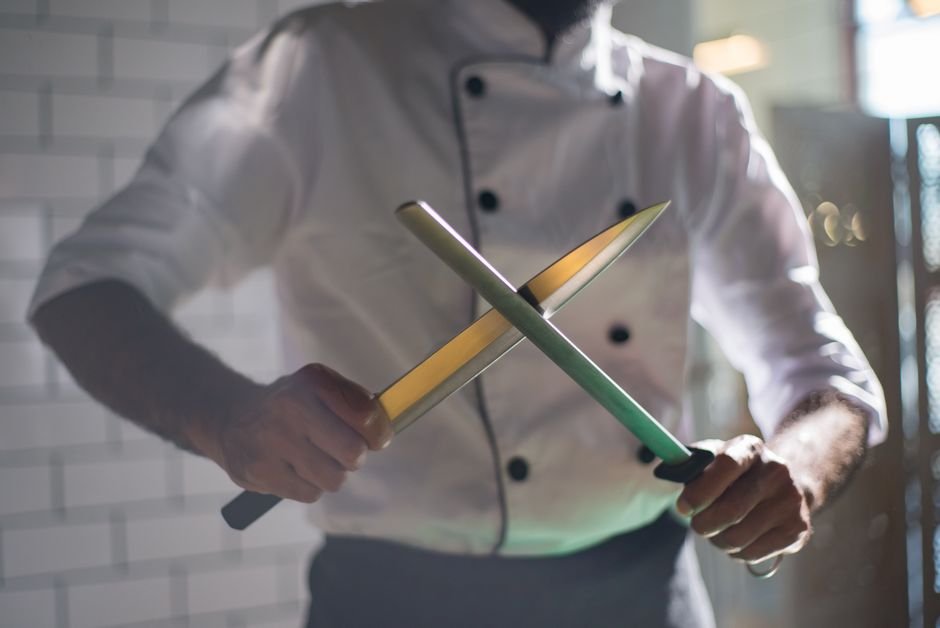
Understanding the distinction between honing and sharpening is crucial for effective knife maintenance. Honing steel often gets confused with sharpening because it looks similar, both are essential for maintaining a knife. However, honing is the process of realigning the edge of a knife, not removing material to create a sharp edge.
You’ll want to hone your knives regularly to extend the intervals between sharpening. A honing steel is ultimately less abrasive and helps keep the edge aligned after each use. To hone your knife, hold the steel vertically and align the blade at a 15 to 20-degree angle. Slide the blade down the steel, alternating sides and repeating several times, until you feel the edge is aligned.
If you take this step seriously, you can significantly enhance the life of your knives and maintain their sharpness longer. So, make it a habit to hone your knives before and after use.
Mastering Sharpening Angles – Avoid Common Pitfalls
A common mistake many people make is neglecting the proper angle when sharpening. Keeping a consistent angle ensures that the knife retains its original bevel and sharpness. Deviating from this angle will lead to poor results, including a dull blade that’s difficult to use and can cause safety risks.
In addition to focusing on the angle, keep an eye on the pressure you apply. Too much force can damage the knife, while too little won’t sharpen effectively. The key is a light, consistent stroke down the stone. Take your time with each pass; it generally takes about 10 strokes on the coarse side followed by 5-7 on the fine side to ensure a good edge.
Practicing on cheaper knives first can help you refine your technique before tackling your more expensive sets. Once you get comfortable, you’ll find it’s not just about having sharp knives; it’s also about sharpening methodically and confidently.
Routine Maintenance is Key – Create a Schedule
The best way to ensure your knives remain sharp is to create a routine maintenance schedule. I recommend sharpening your knives every three to six months, depending on how frequently you use them. If you’re a heavy user, pushing for the shorter interval will give you more consistent results.
Aside from regular sharpening and honing, be mindful of how you store your knives. Avoid tossing them into a drawer where they can hit against other utensils and become damaged. Instead, invest in a magnetic strip or a knife block that protects the blade edges.
Finally, regularly clean your knives with soap and water, avoid the dishwasher as the heat can dull the blades, and the detergent can be harsh on the metal.
The Verdict: Where to Focus Your Energy for Sharp Knives
For best results, use a whetstone, as it offers precision and control, while electric sharpeners can be good for those short on time. Regular honing with a steel should be part of your routine, making it easy to maintain the edge between sharpenings. Pair these practices with proper storage, and your knives will stay effective for years.
Our write-up on choices for your kitchen picks up where this leaves off.
For tips on how to sharpen kitchen knives at home, explore additional resources that can enhance your knife care skills.
Our write-up on ionizer discover picks up where this leaves off.
Frequently Asked Questions
How can you sharpen kitchen knives without a sharpener?
You can sharpen kitchen knives without a sharpener using a honing rod, the edge of a ceramic plate, or even the bottom of a coffee mug. Glide the edge of the knife at a 20-degree angle against these surfaces to realign the blade and make it sharper.
What is the safest method to sharpen knives at home?
The safest method to sharpen knives at home is to use a honing rod or a sharpening stone, ensuring the knife is stabilized on a non-slip surface. Always cut away from your body and keep your hands clear of the blade while sharpening.
Is honing the same as sharpening a knife?
No, honing is not the same as sharpening. Honing realigns the edge of a knife, making it appear sharper without removing material, while sharpening actually grinds away metal to create a new edge.
Why do kitchen knives become dull?
Kitchen knives become dull due to regular use, which can bend or chip the edge, as well as exposure to hard surfaces like cutting boards or bones. Additionally, frequent washing in the dishwasher can cause micro-abrasions that contribute to dullness.
Can you use a whetstone on all types of knives?
Yes, a whetstone can be used on most types of knives, including those made from stainless steel, carbon steel, and ceramic. However, it's important to check the manufacturer's recommendations, as some specialty knives may require specific sharpening techniques.


Leave a Reply