

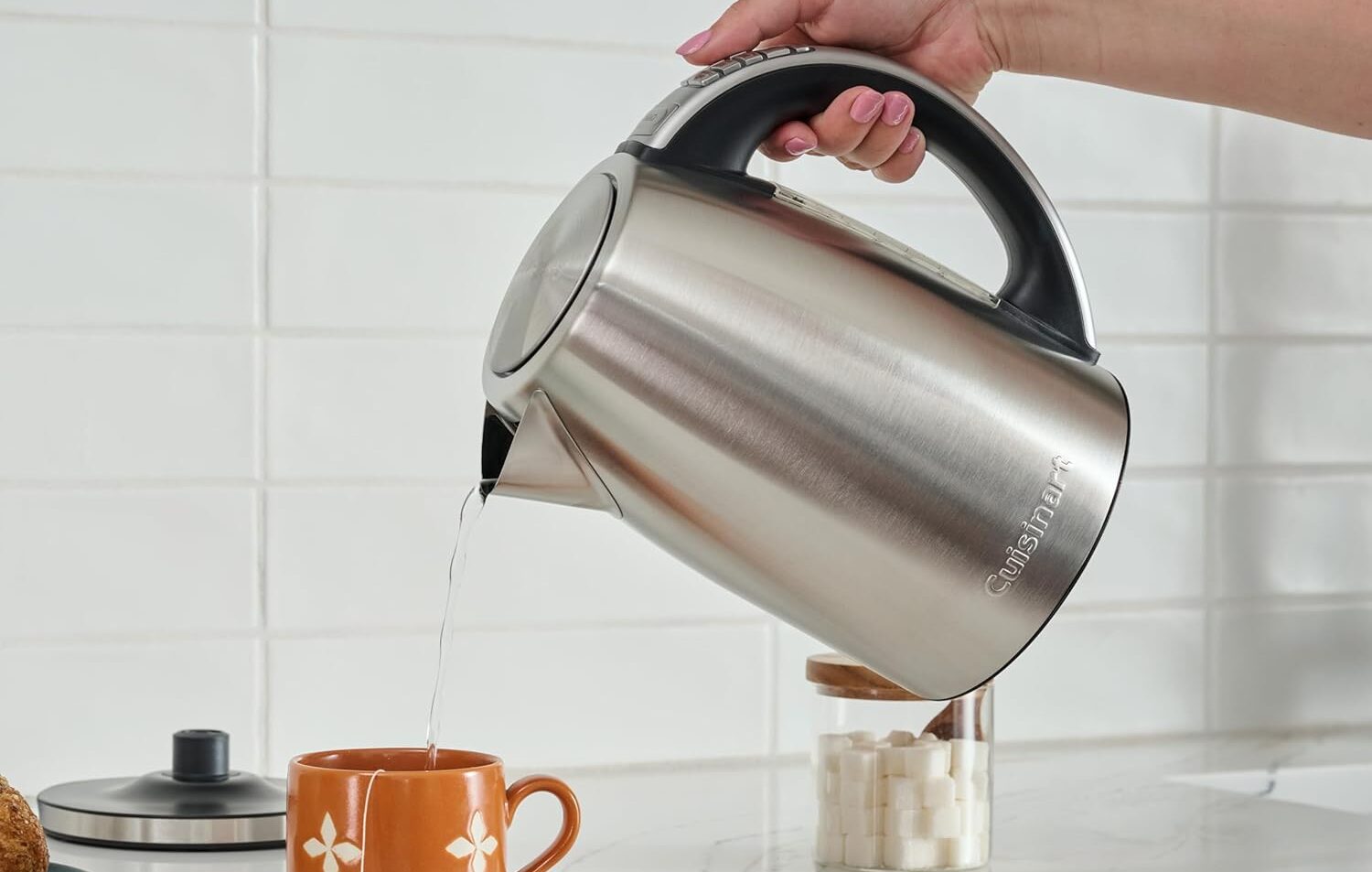
I’ve owned enough cheap kettles to know the pain: weird plastic smell, lids you can’t clean, and “auto shutoff” that only works when it feels like it. For this roundup, I built a real-world testing checklist and put these five popular kettles through the stuff that matters day-to-day: how easy they are to fill, whether the lid design is annoying, how cleanable the inside is, how well the spout pours, how stable the base feels, and whether the features are actually useful (or just marketing).
Quick Buying Questions to Ask Yourself First
Before you pick a kettle, answer these like you’re shopping for future-you on a sleepy morning:
- Do you just need boiling water, or do you care about exact temperatures for green tea, coffee, or baby formula?
- Do you want a gooseneck spout for pour-over coffee, or a standard spout for fast filling mugs?
- Glass or stainless steel? Glass looks clean and you can see the water level instantly, but stainless holds heat well and usually feels tougher.
- How important is easy cleaning? Wide mouth and removable lids matter more than people think.
- Do you need “keep warm,” presets, or smart control—or do you want simple and reliable?
- How much water do you usually heat? Solo tea drinkers can go smaller; families and meal-preppers should stick to 1.7L+.
Electric Kettle Types
| Type | Best For | What You’ll Like | Watch Out For |
|---|---|---|---|
| Basic stainless electric kettle | Fast boils, simple daily use | Usually durable, straightforward | Fewer features, no temp control |
| Glass electric kettle | Seeing water level, “clean” look | Easy visual check, often no plastic contact | Can show water spots; glass needs care |
| Variable-temp kettle with presets | Tea and coffee people | Better taste control, keep-warm options | Costs more than basic |
| Gooseneck kettle | Pour-over coffee | Precise, slow pours | Slower to fill mugs; smaller capacity |
| Smart kettle (app/voice) | Schedules and remote control | Convenience, routines | App dependency; price premium |
Our Top Picks by Category
| Category | Top Pick |
|---|---|
| Best Overall (features + reliability) | Cuisinart PerfecTemp 1.7-Liter Electric Kettle (CPK-17P1) |
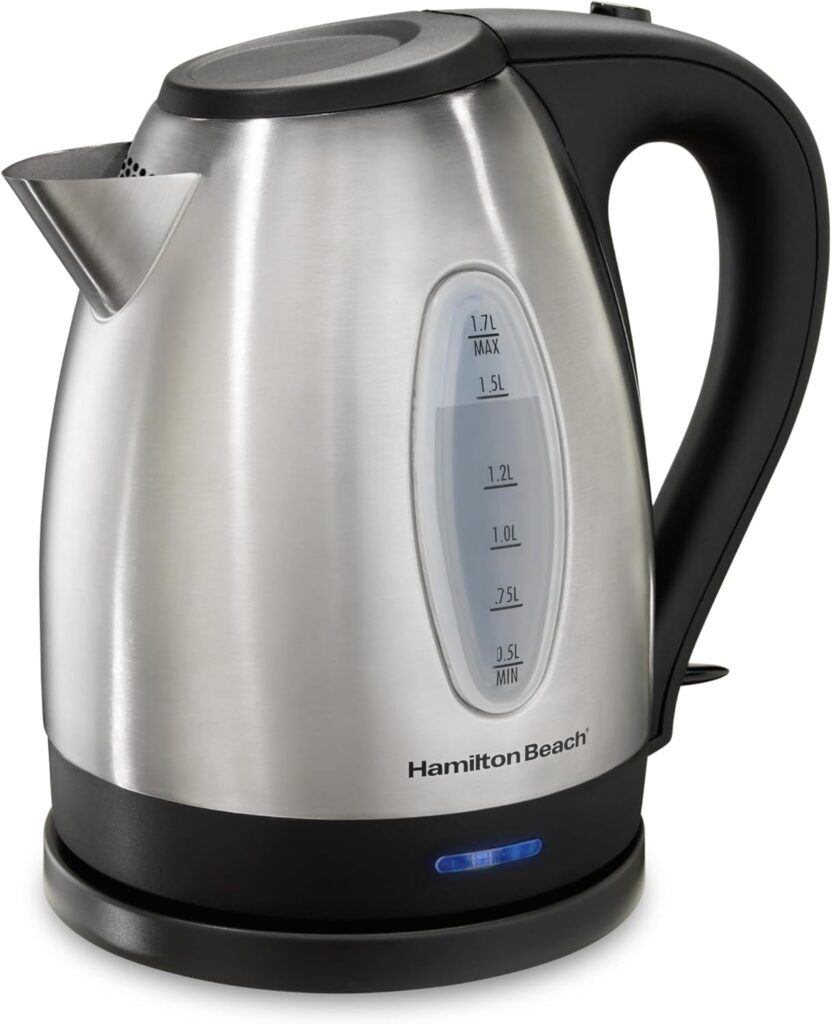
| Best Budget Stainless Steel | Hamilton Beach Electric Tea Kettle 1.7L (40880) |
| Best Glass Kettle (no plastic touching water) | COSORI Electric Kettle 1.7L (GK-172-CO) |
| Best Gooseneck for Pour-Over (smart + precise) | Govee Smart Electric Gooseneck Kettle (H7170) |
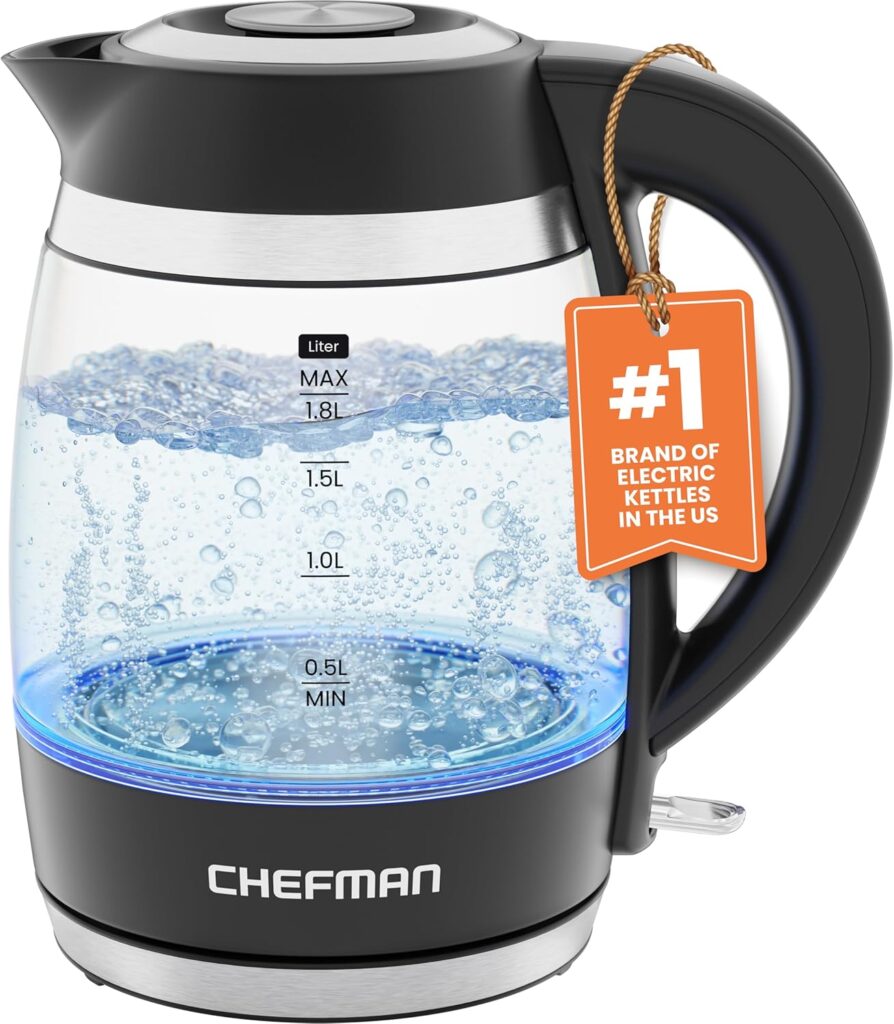
| Best Big Glass Value (easy fill + simple use) | Chefman Electric Kettle 1.8L (RJ11-18-PL) |
Detailed Reviews
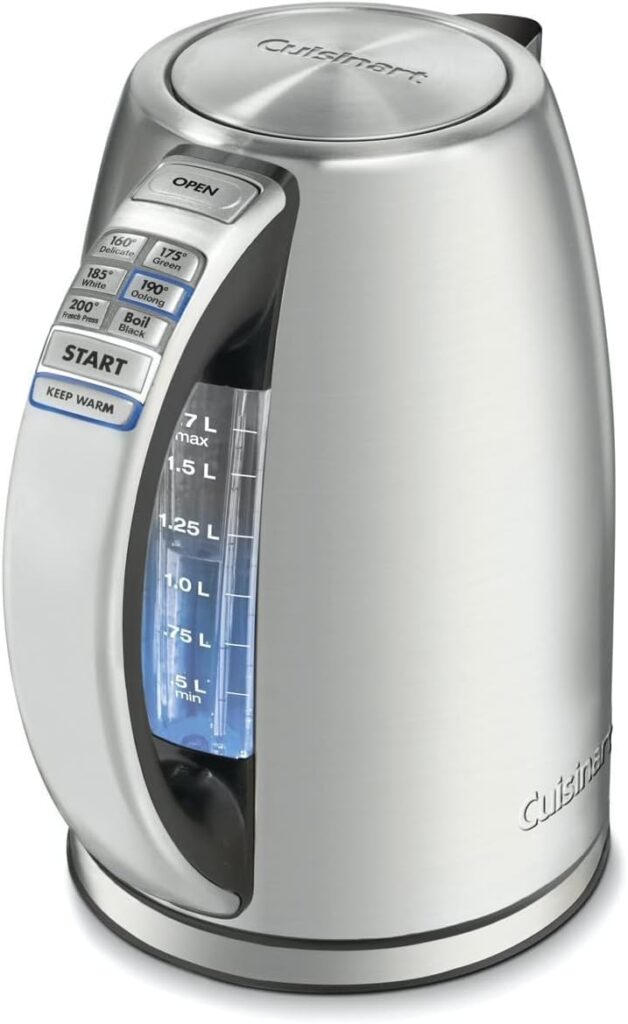
Cuisinart PerfecTemp 1.7-Liter Electric Kettle (CPK-17P1)
Best for
People who want one kettle that does almost everything well: tea drinkers, French press folks, and anyone who likes presets and a keep-warm option.
Why We Like It
This is the “buy once, stop thinking about it” pick. The presets are the big deal here—especially if you rotate between green tea, black tea, and coffee. It feels like a grown-up appliance: solid, stable, and designed for daily use instead of occasional weekends.
You also get a 30-minute keep-warm function, which is clutch if you reheat multiple cups or get pulled into a call and forget your water. Model number is CPK-17P1.
Pros
- Preset temperatures make tea and coffee easier to do right
- Keep-warm function is genuinely useful for busy mornings
- Solid build and a stable base that doesn’t feel flimsy
- Good capacity for families and frequent hot water use (1.7L)
Cons
- Pricier than basic kettles
- More buttons = more to wipe down and keep clean
- If you only ever boil water, you may not use half the features
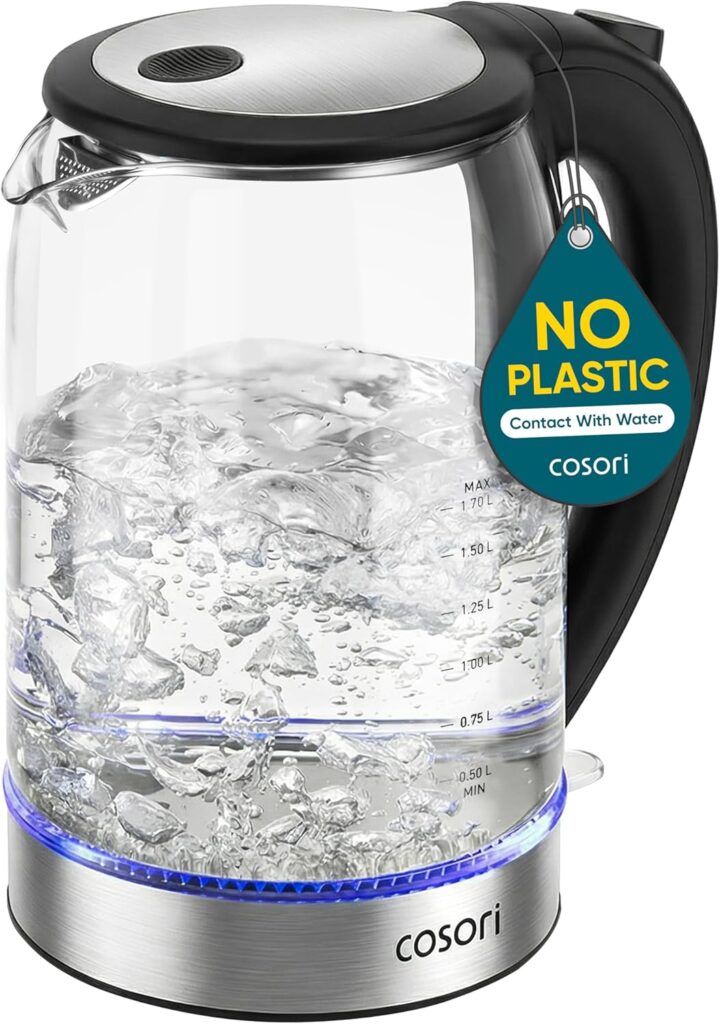
COSORI Electric Kettle 1.7L (GK-172-CO)
Best for
Anyone who wants a glass kettle where water doesn’t touch plastic, plus easy cleaning and a clean countertop look.
Why We Like It
If you’ve ever had that “plastic kettle smell” trauma, this one is a comfort pick. COSORI leans hard into “no plastic contact with water,” and the wide mouth design makes cleaning less of a chore than most glass kettles. It’s a strong middle ground: looks nice, heats fast, and doesn’t feel delicate. Model number is GK-172-CO.
Pros
- No plastic contact with water (nice for taste and peace of mind)
- Wide mouth makes it easier to hand-clean
- Glass body lets you see water level instantly
- Solid everyday capacity (1.7L)
Cons
- Glass shows water spots fast if you have hard water
- You’ll want to descale more often to keep it looking clean
- Not a “precision temperature” kettle if you’re picky about brewing temps
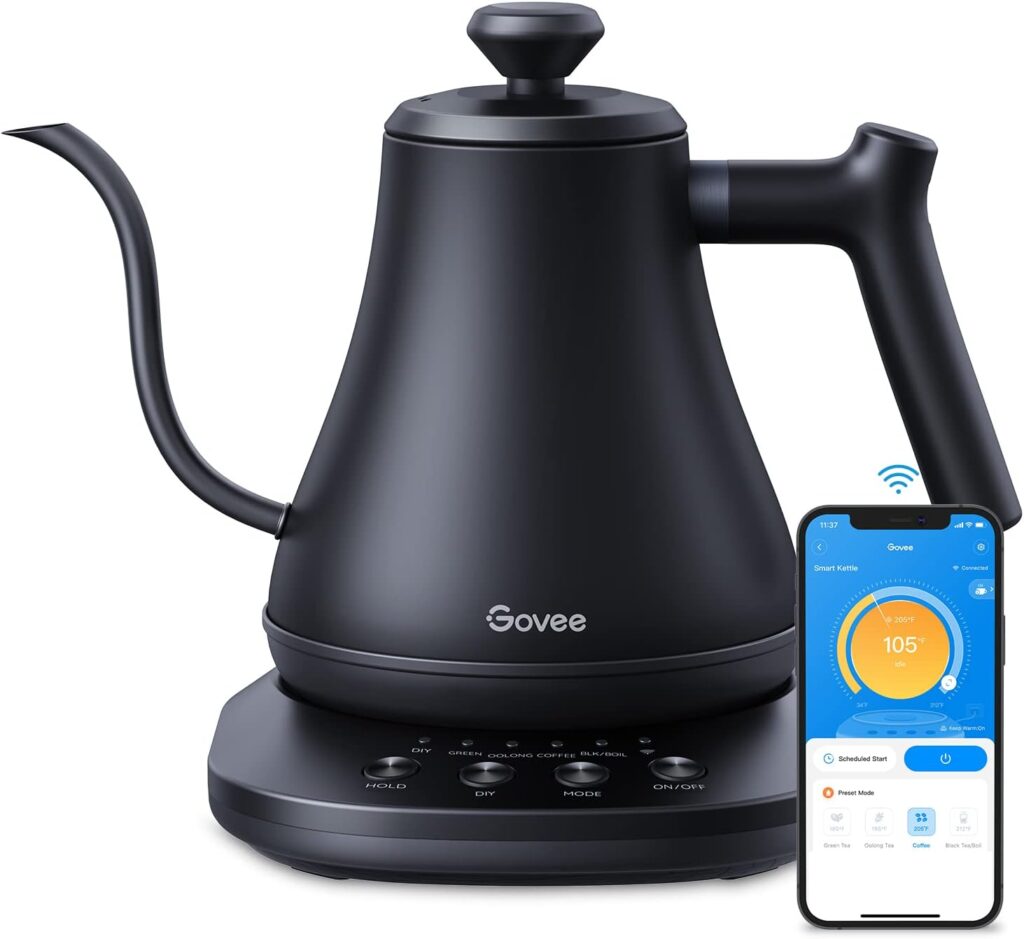
Govee Smart Electric Gooseneck Kettle (H7170)
Best for
Pour-over coffee lovers who want a gooseneck spout and like smart features (app control, voice control, schedules).
Why We Like It
Gooseneck kettles are about control. This one gives you that slow, accurate pour that makes pour-over coffee way less chaotic. Where it stands out is the smart angle: you can control temps and routines through the app, and it’s designed for to-the-degree temperature control and scheduling. Model name/number: H7170.
It’s also a smaller kettle (0.8L), which is honestly perfect for coffee people. You’re not heating a giant tank of water just to make one cup.
Pros
- Gooseneck spout gives excellent control for pour-over
- Smart control (app + voice) is convenient if you’ll actually use it
- Precise temperature control for brewing
- Compact size fits smaller counters and coffee stations
Cons
- 0.8L capacity can feel small if you’re making tea for multiple people
- App features are overkill if you just want “boil water”
- Gooseneck pouring is slower for filling big mugs quickly
Chefman Electric Kettle 1.8L (RJ11-18-PL)
Best for
People who want a bigger glass kettle that’s simple, fast, and easy to live with—especially for noodles, oatmeal, and daily tea.
Why We Like It
Chefman’s 1.8L capacity is the quiet win here. If you regularly make hot drinks plus quick meals (ramen, instant soup, oatmeal), that extra room is genuinely handy. The removable lid sounds small, but it’s a big deal for cleaning and filling without splashing. Model number is RJ11-18-PL.
It’s not trying to be fancy. It’s trying to be practical—and it does that well.
Pros
- Large 1.8L capacity is great for families and meal prep
- Removable lid makes filling and cleaning easier
- Straightforward controls; no learning curve
- Built-in safety features like auto shutoff and boil-dry protection
Cons
- No variable temperature settings
- Glass can show scale buildup (depends on your water)
- If you want “keep warm,” you’ll need a different model
Hamilton Beach Electric Tea Kettle 1.7L (40880)
Best for
Budget buyers who want stainless steel, fast boiling, and zero fuss.
Why We Like It
This is the “just work, please” kettle. Stainless steel body, solid capacity, cordless serving, and the basic protections you want. If you’re buying for an office, a dorm, or you’re simply not interested in extra features, Hamilton Beach is usually a safe bet. Model number is 40880.
It’s also a good backup kettle—the one you don’t baby, but it keeps showing up and doing its job.
Pros
- Reliable, simple design that’s easy to use
- Stainless steel body feels durable
- Auto shutoff and boil-dry protection included
- Good everyday capacity (1.7L) for the price
Cons
- No temperature presets or precision control
- Not as “nice” feeling as premium kettles (but it’s priced accordingly)
- If you’re sensitive to noise, basic kettles can sound louder when boiling
Other Things to Consider Before You Buy
Filtration and water quality
If your tap water is hard, you’ll see scale buildup fast—especially in glass kettles. A basic pitcher filter or faucet filter can improve taste and reduce descaling time. If you don’t want extra steps, stainless steel hides scale better, but it still builds up.
Cleaning and descaling
Wide-mouth openings and removable lids make a big difference. If you hate cleaning, pick the kettle you can reach into easily. Plan to descale with vinegar/water or a descaling solution every few weeks to months depending on your water.
Capacity and footprint
1.7L is the sweet spot for most households. Goosenecks are often smaller (like the Govee 0.8L) by design, because they’re meant for controlled pours, not big batches.
Noise
Most kettles aren’t whisper quiet. Glass kettles let you hear the rolling boil more, and cheaper kettles can sound harsher. If noise matters, pay attention to build quality and base stability.
Speed and power
Many kettles in this category run around 1500W for quick heating. You’ll feel the difference between “fast boil” and “why is this taking forever” pretty quickly in daily use.
Accessories and extras
Some kettles include better filters, better water windows, or nicer bases. But don’t overpay for gimmicks. Pay for the features you’ll use weekly, not once.
Frequently Asked Questions
What’s the real benefit of temperature control on an electric kettle?
Temperature control matters when you care about taste and consistency. Green tea can taste bitter if the water’s too hot, while black tea and many instant foods do fine near boiling. For coffee (especially pour-over or French press), hitting a consistent temperature helps you get repeatable results instead of “sometimes great, sometimes weird.” If you mostly make instant noodles, hot chocolate, or boil water for cooking, temperature control is nice but not necessary.
Is a gooseneck kettle worth it if I don’t make pour-over coffee?
Usually, no. Gooseneck kettles are designed for slow, controlled pouring. That’s perfect for pour-over coffee because you’re trying to saturate grounds evenly. But if your main use is filling a mug for tea, a standard spout is faster and less annoying. The one exception: if you love the look, want precision, and don’t mind smaller capacity—then a gooseneck like the Govee can still be a fun daily kettle.
Glass vs stainless steel: which one lasts longer?
Stainless steel kettles often feel more “lifetime appliance,” mostly because they’re less vulnerable to cracking or chipping. Glass kettles can absolutely last—especially if you’re careful—but they show scale more and can look rough faster in hard-water areas. If you want something that hides wear and feels tougher, stainless is the safer pick. If you want visibility and a clean look (and you don’t mind descaling), glass is great.
How often should I descale my electric kettle?
It depends on your water. With hard water, you might need to descale every 2–4 weeks if you use it daily. With softer water, you may go 2–3 months. The signs are easy: white flakes, cloudy patches on the heating area, slower boiling, or a slightly “off” taste. A simple vinegar-and-water boil (then rinse well) works for most kettles, but always follow the manual if the brand recommends a specific method.
Do “no plastic contact with water” kettles actually matter?
They can, mostly for taste and preference. Some people are sensitive to plastic odors or want to avoid plastic touching hot water altogether. Kettles like the COSORI are popular because they reduce that concern by keeping the water path away from plastic. That said, plenty of kettles use food-grade materials and are fine. If you’re picky about taste or you’ve had plastic-smell issues before, it’s a feature you’ll probably appreciate.
Conclusion
If you want the best all-around kettle that feels like a long-term kitchen upgrade, get the Cuisinart PerfecTemp 1.7-Liter Electric Kettle (CPK-17P1). If you’re on a tighter budget and just want reliable stainless steel boiling power, the Hamilton Beach Electric Tea Kettle (40880) is the practical pick. If you care about a clean water path and love the glass-kettle look, go with the COSORI Electric Kettle (GK-172-CO). For pour-over coffee people who want precision pouring plus smart control, the Govee Smart Electric Gooseneck Kettle (H7170) is the move. And if you want a bigger glass kettle that stays simple and easy to live with, the Chefman Electric Kettle 1.8L (RJ11-18-PL) is a strong everyday option.


Leave a Reply